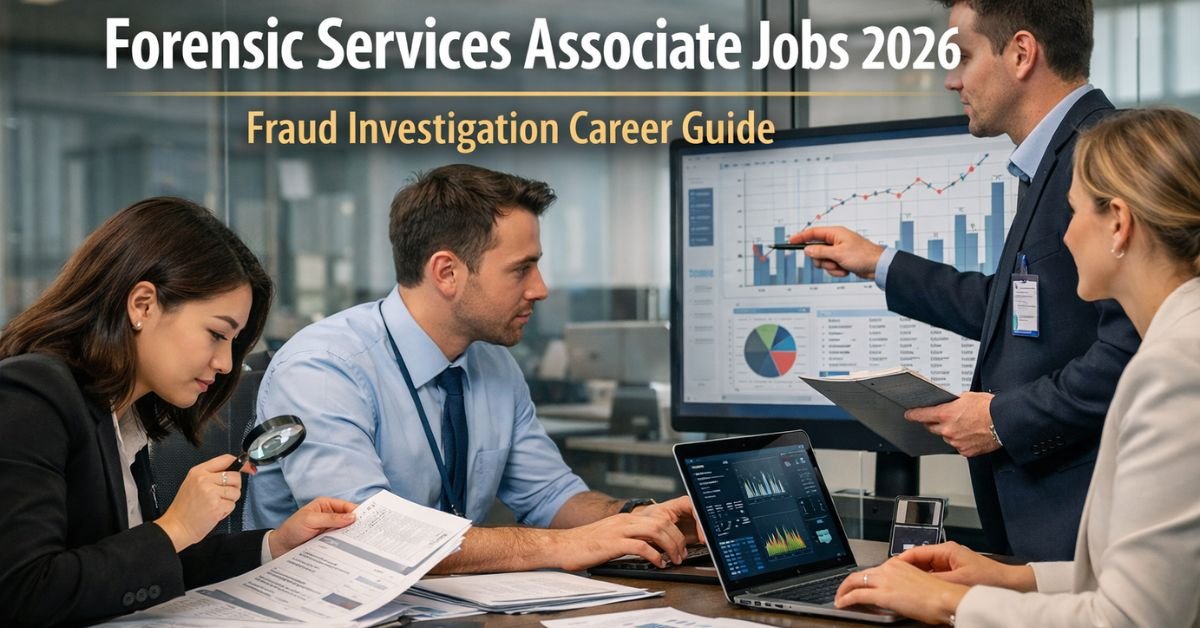
Forensic Services Associate Jobs 2026
In today’s business world, companies can face problems like money cheating, corruption, breaking rules, and data tricks. Businesses must protect their money systems, good name, and the trust of their customers. Because of this, more people are needed who can find fraud and check into money crimes. One good job in this field is the Forensic Services Associate role.
For 2026, many consulting firms, financial advice companies, and corporate investigation teams want to hire Forensic Services Associates. These workers help companies stop fraud, look into suspicious money activities, and make their anti-corruption systems stronger. These experts work with companies to study evidence, check papers, and find risks that could cause money loss or legal trouble. A job in forensic services is a special chance to use thinking skills, investigation skills, and money knowledge. People in this field help companies find the truth behind difficult money situations. They also support legal and rule-based processes when fraud or bad behavior happens.
This guide explains everything you need to know about Forensic Services Associate Jobs in 2026. It covers the job role, duties, skills needed, education, career benefits, and how to begin a good career in fraud investigation.
Overview of the Forensic Services Associate Role
A Forensic Services Associate works in fraud investigation, risk advice, and company compliance. These workers help companies find money crimes, study suspicious transactions, and check business risks that could affect work.
This job is usually found in:
- Consulting firms
- Audit firms
- Corporate compliance departments
- Government investigation teams
Associates work with skilled forensic experts to:
- Study data
- Look into fraud claims
- Give detailed reports
These reports help companies make smart choices. Forensic services workers are important for stopping fraud before it starts. They help businesses find weak spots in money systems and create controls that lower the risk of corruption, bribery, and money wrongdoing.
The job needs:
- Strong analysis skills
- Careful attention
- The ability to understand money and non-money information
Often, forensic workers also help with:
- Digital checks
- Finding electronic evidence
- Data study projects
Main Responsibilities of a Forensic Services Associate
The main jobs of a forensic services associate are about investigation, research, and compliance help. While the exact tasks can change based on the company or firm, the main duties usually include the following.
Fraud Investigation and Risk Analysis
One main job of a forensic associate is helping companies look into suspected fraud or corruption.
This means:
- Checking money transactions
- Finding unusual patterns
- Studying papers to see if wrongdoing happened
People in this job often work with:
- Legal teams
- Compliance departments
- Outside investigators
to collect proof and understand the full problem.
Anti-Corruption Compliance Programs
Many companies work in different countries where corruption risks can be high. Forensic services associates help businesses:
- Create anti-corruption programs
- Check compliance systems
- Improve internal controls
These programs must follow international rules and compliance standards.
They help businesses:
- Watch compliance policies
- Find weak spots in internal controls
- Suggest improvements to lower corruption risks
Evidence Analysis and Documentation Review
Forensic experts check many types of records during investigations, such as:
- Emails
- Contracts
- Financial documents
- Internal papers
By looking closely at these records, they can find:
- Links between people
- Suspicious transactions
- Company actions that may show fraud
Digital Forensics and Data Analysis
Modern investigations often involve digital information analysis.
Forensic associates may:
- Use advanced data tools
- Analyze large data sets
- Identify suspicious patterns
Digital forensics can include:
- Checking electronic messages
- Investigating data leaks
- Studying computer systems used in financial fraud
Research and Reporting
Another key job is doing detailed research and writing professional reports.
These reports:
- Explain investigation findings
- Describe fraud risks
- Suggest improvements
Forensic associates also help prepare:
- Client presentations
- Investigation summaries
- Advisory project documents
Collaboration with Investigation Teams
Forensic investigations often require teamwork between different experts, including:
- Legal advisors
- Data analysts
- Auditors
- Compliance specialists
Associates work closely with these teams to:
- Gather evidence
- Share insights
- Support the full investigation process
Skills Required for a Forensic Services Career
A successful career in fraud investigation requires both technical abilities and personal skills.
Important skills include:
- Analytical thinking
- Attention to detail
- Communication skills
- Investigation abilities
- Data analysis knowledge
- Team collaboration
Analytical Thinking
Forensic professionals must be able to analyze complex financial data and identify patterns that may indicate fraud or wrongdoing.
Attention to Detail
Investigations often depend on small pieces of evidence hidden inside large datasets. Careful attention helps investigators:
- Detect anomalies
- Find important clues
- Identify suspicious activities
Communication Skills
Associates must clearly explain their findings through:
- Written reports
- Presentations
- Discussions with clients or legal teams
Research and Investigation Skills
The ability to gather information from multiple sources and verify its accuracy is essential in forensic investigations.
Digital and Data Analysis Skills
Modern investigations require examining:
- Electronic records
- Databases
- Communication logs
Knowledge of data analytics tools and digital investigation techniques is extremely valuable.
Teamwork and Collaboration
Forensic projects often involve many specialists working together.
Associates must:
- Cooperate with colleagues
- Communicate clearly
- Work efficiently with clients and investigation teams
ALSO READ: Restaurant Assistant Manager Jobs 2026 – Ritz-Carlton Visa Sponsorship
Education and Qualifications
Most forensic services associate roles require a university degree.
Common degree fields include:
- Accounting
- Law
- Computer Science
- Finance
- Business Administration
- Economics
While not always mandatory, professional certifications can improve career prospects.
Common certifications include:
- ACCA (Association of Chartered Certified Accountants)
- CFE (Certified Fraud Examiner)
- CIA (Certified Internal Auditor)
- ICAN (Institute of Chartered Accountants of Nigeria)
These certifications demonstrate expertise in:
- Financial investigations
- Fraud detection
- Compliance systems
Experience Requirements
Entry-level forensic associate roles usually require 1–2 years of relevant work experience. Relevant fields include:
- Risk advisory
- Consulting services
- Audit and assurance
- Compliance investigations
- Financial analysis
However, even new graduates can succeed in forensic services if they demonstrate:
- Strong analytical ability
- Research skills
- Motivation to learn
Career Opportunities in Forensic Services
Fraud investigation is a rapidly growing field with strong career prospects. Professionals may work in industries such as:
- Consulting firms
- Accounting and audit firms
- Corporate compliance departments
- Financial institutions
- Government agencies
- Legal advisory firms
With experience, professionals can advance into roles such as:
- Senior Forensic Consultant
- Fraud Investigation Manager
- Risk Advisory Manager
- Compliance Director
- Financial Crime Specialist
This career path provides opportunities for:
- International work
- Specialized expertise
- Professional growth
Why Fraud Investigation Is a Growing Career
Several global trends are increasing the demand for forensic professionals.
Increasing Financial Fraud
As financial systems become more complex, the risk of fraud increases. Organizations need experts who can detect and prevent financial misconduct.
Global Compliance Regulations
Governments around the world have introduced stricter laws to prevent corruption and financial crime. Companies must comply with these regulations, creating demand for forensic specialists.
Digital Transformation
Businesses increasingly rely on digital systems. Therefore, fraud investigations often involve analyzing electronic data and communication.
Corporate Governance Requirements
Organizations must maintain strong governance systems to protect investors and stakeholders. Forensic professionals help companies remain transparent and accountable.
Benefits of a Career in Forensic Services
A career in forensic services offers several advantages.
High Demand for Skilled Professionals
Fraud investigation and compliance management are critical for businesses. This ensures steady demand for skilled professionals.
Diverse Work Experience
Forensic associates work on a wide range of cases and projects, making the work both challenging and engaging.
Opportunities for Global Work
Many consulting firms operate internationally. This allows forensic professionals to work on cross-border investigations.
Competitive Salary Potential
As professionals gain experience and certifications, their earning potential increases.
How to Start a Career in Forensic Services
If you want to work in fraud investigation, the following steps can help.
1. Obtain a Relevant Degree
A degree in accounting, law, computer science, or finance provides a strong foundation.
2. Gain Experience in Risk Advisory or Audit
Early experience in consulting, compliance, or audit helps develop investigative skills.
3. Develop Analytical and Digital Skills
Learning data analytics tools and digital investigation methods strengthens career opportunities.
4. Consider Professional Certifications
Certifications such as ACCA or CFE demonstrate expertise and improve credibility.
5. Apply for Entry-Level Roles
Look for positions such as:
- Forensic associate
- Risk advisory analyst
- Fraud investigation trainee
The Future of Fraud Investigation Careers
The demand for forensic professionals is expected to increase significantly in the coming years.
Organizations worldwide are investing in:
- Fraud detection systems
- Compliance programs
- Financial risk prevention
Technology is also transforming the field.
New tools such as:
- Data analytics
- Artificial intelligence
- Digital forensics
help investigators analyze complex data more effectively. Professionals who understand both financial analysis and digital investigation techniques will be highly valuable in the job market.
Frequently Asked Questions
What does a Forensic Services Associate do?
A forensic services associate investigates financial fraud, reviews documents and digital records, supports compliance programs, and helps organizations prevent corruption and financial misconduct.
Is forensic accounting a good career?
Yes, forensic accounting and fraud investigation careers offer strong demand, competitive salaries, and opportunities to work on complex financial investigations.
What degree is needed for forensic services?
Most roles require a bachelor’s degree in accounting, law, finance, computer science, or a related discipline.
Do I need certification for a forensic career?
Professional certifications such as ACCA, CFE, or CIA are not always required but can improve career prospects.
What skills are important for fraud investigators?
Important skills include:
- Analytical thinking
- Attention to detail
- Communication skills
- Research ability
- Digital data analysis knowledge
Conclusion
Forensic services is an exciting and fast-growing career for people interested in fraud investigation, financial analysis, and corporate compliance. As organizations face increasing risks from corruption, financial crime, and regulatory requirements, the demand for skilled forensic professionals continues to grow.
The Forensic Services Associate role in 2026 provides an excellent opportunity for graduates and early-career professionals to enter the field of fraud investigation and risk advisory. By developing strong analytical skills, gaining practical experience, and earning professional certifications, individuals can build a rewarding career that helps organizations remain transparent and protect their financial integrity.
For those interested in finance, investigation, and corporate governance, forensic services offers both professional growth and the opportunity to contribute to the fight against financial crime.