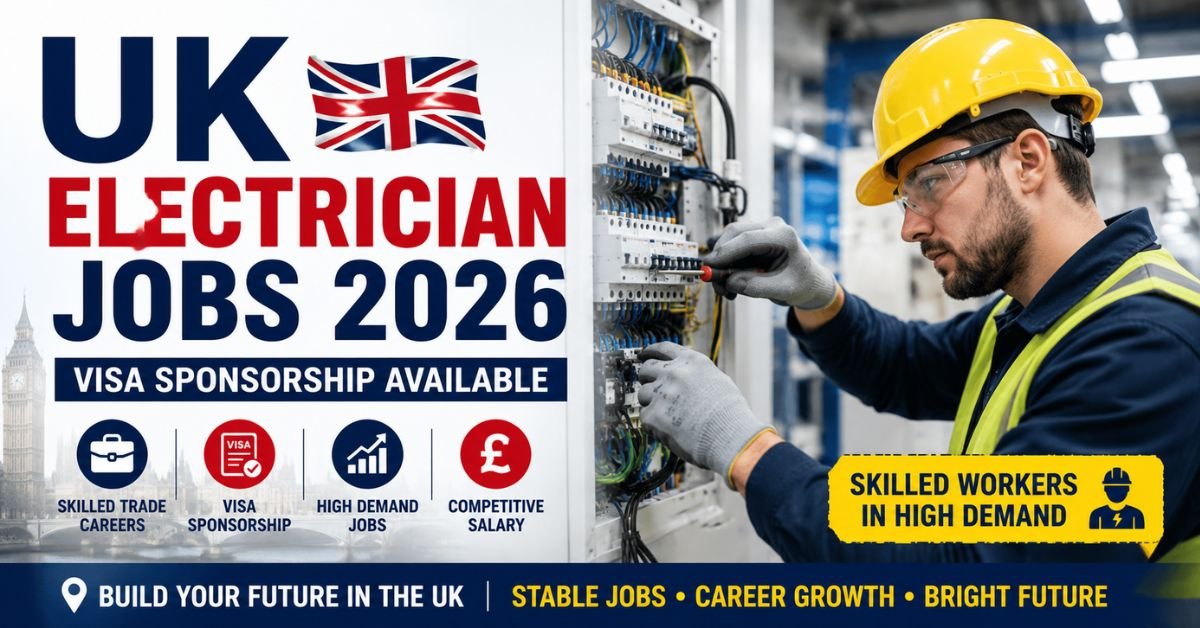
UK Electrician Visa Sponsorship Jobs 2026 – Skilled Trade Careers
As the construction sector continues to thrive, the demand for skilled electricians in the UK remains high, fuelled by a rise in renewable energy installations, smart homes, and infrastructure developments. International individuals seeking a stable career opportunity abroad will find that UK Electrician Visa Sponsorship Jobs in 2026 are an ideal choice as they allow you to work legally, are competitive, and provide you long-term career experience in a high-demand trade sector.
The shortage of qualified electricians in the U.K. construction, maintenance, industrial, transportation, and energy sectors has led to employers actively seeking qualified workers. Thus, in some cases, companies may be ready to sponsor foreign workers under the legal work visa program if they don’t have qualified local employees available.
Overview of UK Electrician Visa Sponsorship Jobs 2026
Skilled trades are a significant contributor to the UK’s economy. Electricians play a crucial role in both residential homes and commercial structures, particularly in renewable energy installations, transportation systems, and industrial facilities. With rising construction projects and the aging of electrical systems, employers still need skilled personnel to install, repair and maintain electrical installations safely.
Electrician positions that offer visa sponsorship are an opportunity for international candidates to secure legal work in the UK. Sponsorship involves a licensed United Kingdom (UK) employer helping a worker to apply for a visa to legally live and work in the UK.
Electricians can find employment in a variety of settings such as:
- Residential construction
- Commercial buildings
- Industrial facilities
- Renewable energy projects
- Maintenance services
- Manufacturing plants
- Smart technology installations
The UK government has created a skilled worker visa scheme to enable employers to hire overseas staff for roles that fall within the scheme. There are certain skilled electrical trades that may be a desired trade for employers in a trade shortage where they may be able to hire international workers.
Why Electricians Are in Demand in the UK
There are various reasons behind the growing need for electricians in the UK for 2026.
Constructing new structures
New housing developments, commercial buildings, hospitals, schools and transportation developments are continuing to be built in the UK construction industry. All new projects must be serviced by electrical installation and maintenance, which is certified.
Renewable Energy Expansion
The UK government are making significant investments in renewable energy and sustainable infrastructure. Electricians are needed for solar systems, wind farms, electric vehicle charging stations and smart energy systems.
Aging Infrastructure
There are many older buildings and electrical systems in the UK that require updating and safety measures. Provides regular employment for qualified electricians.
Skilled Labor Shortages
Across a range of industries, there is a shortage of skilled tradespeople. As more employers seek international skilled workers, a growing number of people are retiring and fewer individuals are participating in local trade.
Smart Technology Adoption
Smart lighting, automated systems, security technology, and energy-efficient installations are now used in modern homes and offices, creating an increased demand for electricians with more modern technical skills.
Types of Electrician Jobs Available
Foreign workers UK have a number of electrician career options.
Residential Electrician
A residential electrician performs work on residential buildings, housing projects and apartments. They are responsible for wiring, electrical installation, repair and inspection tasks.
Commercial Electrician
Commercial electricians are employed in the offices, shopping centres, hotels, schools, and health care centres. They are typically bigger electrical systems and maintenance jobs.
Industrial Electrician
Industrial electricians are employed in manufacturing plants, factories, and warehouses. They keep up heavy equipment, industrial systems and automated equipment.
Maintenance Electrician
Regular inspection and repair work by the maintenance electricians is carried out to keep the electrical system safe and efficient.
Renewable Energy Electrician
They are trained to install and maintain Solar, Wind, Battery Storage and Electric Vehicle charging systems.
Construction Site Electrician
Construction electricians help with temporary power systems, wiring up buildings, and big projects.
Visa Sponsorship Opportunities for Foreign Workers
There are some UK employers who are approved sponsors for the Skilled Worker visa route. When there is a shortage of qualified local workers, these businesses are allowed to employ foreign staff.
Industries with a shortage of laborers offer more opportunities for visa sponsorship, such as:
- Construction
- Engineering
- Industrial maintenance
- Renewable energy
- Transportation infrastructure
- Building services
Typically, employers seeking sponsorship seek candidates who have:
- Relevant electrician qualifications
- Practical work experience
- English communication skills
- Safety certifications
- Ability to work independently
- Understanding of electrical regulations
International candidates who have good technical experience might have better opportunities in the applications of large construction companies or industrial contractors.
Skills and Qualifications Required
Employers in the UK typically look for electricians with a mix of technical skills, hands-on experience, and an understanding of safety.
Important Certifications That May Help
While each employer has its own set of requirements, these certifications can help the job prospects:
- Electrical installation qualifications
- Trade diplomas or vocational certifications
- Health and safety training
- Inspection and testing certifications
- Renewable energy training
- Industrial electrical maintenance certificates
Employers may also require employees to undertake UK based certification procedures after they have arrived.
UK Work Visa Options for Electricians
Skilled worker immigration is the preferred pathway for international electricians.
Skilled Worker Visa
One of the primary legal avenues for foreign workers is the Skilled Worker visa.
Some of the key features can be:
- Employer sponsorship
- Approved job offer
- Minimum salary requirements
- English language requirements
- Renewable work authorization
Temporary Work Routes
Temporary workers or those hired on a project basis may also come in if the employer needs them and if the visa requirements allow, depending on the employer’s needs.
Visa rules can change over time and applicants are advised to check the up-to-date official immigration guidance before applying.
Step-by-Step Application Process
Sponsorship’s for electricians in the UK are not easy to come by, so it’s important to be prepared and patient when looking for such opportunities.
Create a professional CV
Your CV should contain:
- Electrical qualifications
- Work experience
- Technical skills
- Certifications
- Safety training
- Language skills
Ensure that your resume is neatly written and used in professional English.
Important Certifications That Could Be Helpful
Even if companies ask for different things, having one of these certs might help you land a role
- Electrical installation qualifications
- Trade diplomas or vocational certifications
- Health and safety training
- Inspection and testing certifications
- Renewable energy training
Industrial electrical maintenance certificates
Once they arrive, a few companies might require staff to go through certifications unique to the UK.
Electrician visa paths UK
Most electricians from overseas head abroad using pathways meant for trained tradespeople.
Skilled Worker Visa
A route open to overseas employees? The Skilled Worker visa stands as a primary option. It allows entry under set government rules. Workers need job offers matching approved skill levels. Sponsors must hold licensed status. Permissions last several years, sometimes longer. Rules change often, yet this path remains central.
Key features may include:
- Employer sponsorship
- Approved job offer
- Minimum salary requirements
- English language requirements
- Renewable work authorization
Temporary Work Routes
Workers might get in through short-term jobs or gigs, shaped by what companies need at the time along with how visas are set up. Not every path is fixed; some openings appear based on timing and rules in place.
Visa rules can shift without warning, so checking current government guidelines is wise prior to submission. What was accurate last month might not hold today – staying updated simply makes sense. Expecting old information to work could lead to delays. Rules evolve, applicants adapt. Double-checking details just before sending forms tends to help. Guidance online often reflects changes faster than printed material. Last-minute verification? Often worthwhile. Procedures differ across countries, yet one thing stays true: timing matters when it comes to paperwork.
Step-by-Step Application Process
Finding work as an electrician in the UK with visa help means getting things ready while moving at a steady pace.
Prepare a professional CV
- Your CV Should Include
- Electrical qualifications
- Work experience
- Technical skills
- Certifications
- Safety training
- Language skills
Make sure your resume is written clearly in professional English.
Find employers who sponsor visas
Look for employers that are licensed to sponsor international workers.
Browsing options include:
- Construction company websites
- Skilled trade recruitment agencies
- UK job portals
- Industrial maintenance firms
- Renewable energy companies
Submit Applications
Start by picking roles fitting what you already do well. For every one, adjust the details so they speak directly to what the company wants.
Attend interviews
Ready yourself for conversations about your background when companies interview overseas candidates digitally. A few hiring managers prefer virtual chats across borders
- Technical experience
- Safety practices
- Electrical systems knowledge
- Previous projects
- Availability for relocation
Get Job Offer with Visa Support
Should things go that way, papers for the visa could come from the hiring company. Arrangements might appear if the situation moves forward. The necessary forms may show up through their office. Getting picked could mean receiving what’s required. Office channels possibly deliver the right paperwork. Approval sometimes brings supporting documents. Movement in the process can lead to official letters.
Apply for Work Visa
Submit your visa application using official immigration procedures and required documentation.
Get ready to move
Packing up your life? Sort housing first – flights come next, then cash flow. Moving overseas means nailing down a place to stay, lining up transport details shortly after, money matters last but never late.
Industries Seeking Electricians in 2026
Several UK industries are expected to continue hiring electricians throughout 2026.
Construction and Infrastructure
Fresh wiring jobs keep going wherever big buildings or homes rise up.
Renewable Energy
Fueled by climate targets, solar and wind power see rising funding across nations. While fossil fuels fade slowly, green grids gain ground through policy pushes.
Manufacturing and Industrial Facilities
Machines hum day after day inside factories, needing skilled hands to keep them running. Workers who fix electrical parts arrive when something falters in the system. Automated setups rarely pause, so someone must always be ready nearby. Problems pop up without warning, demanding quick eyes and steady tools. These jobs stick close to large equipment that never really sleeps.
Transportation
Electrical techs often find work maintaining train lines, airport facilities, or city transit services. Sometimes it’s rail jobs leading the way, sometimes terminals taking priority. Public transport needs skilled hands too, keeping lights on, signals running. Each system operates differently yet counts on similar expertise underneath.
Smart Building Technology
- Fitted with today’s tech, smart structures depend on electricians who understand automated setups. Energy-saving designs call for workers trained beyond basic wiring tasks.
- Working as an electrician in the UK offers steady work regular pay and chances to solve real problems
- Working in the UK can provide several professional and financial advantages for international workers.
Competitive Salaries
Working as an electrician often means steady pay, while extra hours add up over time. Progressing further in the job opens doors without needing a rush. Some find growth comes slowly – others notice shifts after just a few years.
Career Growth
Some seasoned employees find themselves stepping into oversight positions. Others shift toward checking work quality instead. A few take charge of entire projects over time.
International Experience
Spending work time in Britain opens doors you might not expect. A job there brings fresh chances to grow, shaping what comes next in ways that stick.
Stable Demand
Folks still need electricians everywhere, so jobs keep showing up. Though machines change, power systems demand skilled hands just the same.
Training Opportunities
Training programs in safety or technical skills sometimes come from employers.
Modern Work Environments
Across the UK, plenty of initiatives rely on modern machinery while weaving in intelligent technology alongside stronger safety rules.
Challenges international workers often encounter
Even when chances open up, settling overseas for a job brings its share of hurdles. Yet adjusting to new places often means facing unfamiliar routines head on.
Qualification Recognition
Some overseas qualifications may need assessment or additional certification.
Visa Processing Times
Getting through immigration might stretch out, especially when piles of paperwork pile up. Sometimes it drags because forms need checking, rechecking. The line moves slower when more people apply at once. Waiting becomes longer if details aren’t clear right away. Each case unfolds at its own pace, shaped by how fast things get processed.
Cost of Living
Costs of daily life shift from one UK city to another. Outside London, prices often settle lower than in the capital.
Weather and lifestyle adjustment
Starting fresh somewhere far can mean getting used to different weather, daily habits, one workplace at a time. Sometimes it takes weeks before things feel normal, depending on where someone comes from. A new country often brings surprises in how people communicate, what they expect on the job. Each person moves at their own pace when settling into unfamiliar routines.
Competition
Out of every ten applicants, a few have solid experience – preparing well just makes sense. Getting ready matters because competition shows up sharp.
How to Improve Your Job Application Success
Gain Specialized Skills
Skills in industrial automation open doors more easily these days. Renewable energy setups demand knowledgeable workers now. Smart buildings need people who understand their tech too.
Improve English Communication
Finding ways to speak plainly makes things go smoother when talking with bosses or doing daily tasks at work.
Build International-Style CVs
A well-built CV made for British hiring teams often leads to more chances to talk with employers. While matching your experience to what companies want opens doors quietly behind the scenes.
Apply Consistently
Searching for work usually means sending out many requests before landing a sponsored role. Getting hired takes time, one try after another until something opens up.
Keep Track of UK Regulatory Changes
Grasping how electricity is handled across UK workplaces could tilt things in your favor. While rules shape daily tasks, knowing them quietly shifts the balance. A step ahead often comes not from speed but from awareness of what’s required where you work.
Common mistakes to avoid
Applying Without Research
Check first – does the company have legal permission to back foreign hires? It matters more than most think. Approval status isn’t always obvious. Some firms claim they can support visas but haven’t filed correctly. Government records show who’s cleared. Guessing leads to delays. A quick search beats assumptions every time.
Ignoring Certification Requirements
Not every role fits right away – some need extra learning just to meet basic rules.
Using Generic Resumes
Customized applications perform better than generic mass applications.
Falling for Scams
Watch out for job scams that ask you to pay big fees before starting work. These deals often promise too much without proof. Some might claim you’ll earn huge amounts right away – don’t believe it. Offers needing money just to apply are usually traps. If something sounds too good to be true, walk away slowly.
Weak Interview Preparation
Practical electrical skills could come up during tech interviews. Safety steps might be checked too, depending on the role.
Also Read; UK HR Advisor Jobs 2026 – Remote Part-Time Role With Flexible Hours
FAQs
-
Electrician roles in the UK – will they come with visa help by 2026?
Most times, UK companies can back foreign electricians if they meet job needs and have proper approval to hire overseas talent. Not every firm offers this – depends on their license plus current market gaps.
-
What qualifications are usually required?
Folks hiring might ask for different things, yet certs from a trade program often show up on the list. Electrical work history tends to matter quite a bit too. Safety courses usually make the cut as well.
-
How much do electricians usually earn across the UK?
Some electricians bring home around £35,000 to £45,000 a year, though those in niche positions often make more. Yet pay tends to climb when skills get sharper.
-
English Skills Matter?
Clear speaking helps. Team tasks move smoother when everyone gets the message right. Rules about staying in some countries usually expect at least simple English. Mixing well on site depends heavily on shared understanding through speech. Even small talk can prevent misunderstandings that lead to accidents.
-
Can electricians work in renewable energy projects?
Fueled by growth in clean power systems, wiring experts now face rising needs tied to digital grids. While solar arrays spread, training gaps widen – yet hands-on roles grow faster than expected. Machines talk more; people who connect them stay essential. New tech rolls out, sparking steady work for those who install it right.
Final Thoughts
Electrician jobs in the UK that include visa sponsorship are still a strong option for qualified overseas professionals looking to build careers abroad. Demand keeps growing – especially in building projects, green power, transport systems, and manufacturing plants. These roles hold steady importance within the country’s job market. Skilled wiring experts find consistent need wherever development happens.
Job hunting works better when you plan ahead, know your trade well, follow safety rules, speak clearly, yet look carefully for openings. Even though getting a work visa is tough, some people stand out if they’ve done good work before while showing up professionally.
Most folks check the rules first – immigration details, job sponsor approvals, qualifications needed – before sending anything in. Starting smart opens doors for electricians from abroad: solid jobs, hands-on learning, a chance to grow skills across borders, all within reach if steps are taken carefully.