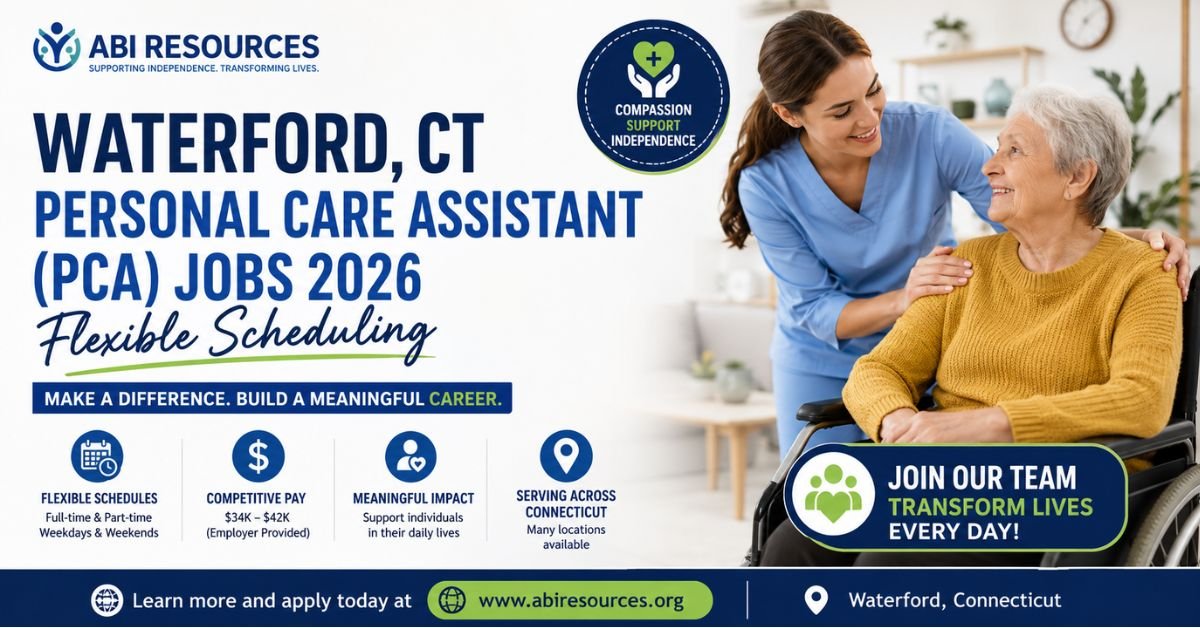
Waterford PCA Jobs 2026 in Connecticut | Flexible Scheduling
The need for professionals in the compassionate health and disability field is on the rise in the United States, particularly in Connecticut. One position that has been receiving attention in 2026 is the Personal Care Assistant (PCA) position with ABI Resources located in Waterford, CT. Flexible hours, rewarding work with impact and opportunity to work with people recovering from brain injuries, strokes and traumatic brain injuries in their home and community.
If you are a job seeker looking for more stable careers in the health care industry, but do not want to pursue advanced medical degrees, a career in PCA may be the right choice. ABI Resources provides opportunities in many locations throughout Connecticut for full-time, part-time, flexible or community-based healthcare support roles.
Overview of ABI Resources Personal Care Assistant Jobs
ABI Resources is looking to hire individuals who are compassionate and want to make a difference in people’s lives to fill the role of Personal Care Assistant (PCA). These positions are related to working with adults with neurological injuries and disabilities to help keep them independent in their home and community setting.
In contrast to work at hospitals where schedules and environments may be inflexible and stressful, ABI Resources works on an individualized basis and supports community integration and relationship-based care. It provides flexible working hours for those who want to work on a weekday, weekend, part-time or full-time basis.
This opportunity is particularly appealing to:
- Entry-level caregivers
- Healthcare support workers
- Certified Nursing Assistants (CNAs)
- Direct Support Professionals (DSPs)
- Students who are entering a pathway in the health sector as a career.
- People with the desire for flexible working hours.
- Caregivers who are going through a transition into the disability field with empathy and caring.
In Connecticut, as demand for home healthcare and rehabilitation support services increase, the value of PCA positions is increasing, and they are highly stable career paths.
About ABI Resources
ABI Resources is a disability support group based in Connecticut dedicated to helping those recovering from:
- Brain injuries
- Traumatic brain injuries (TBI)
- Strokes
- Neurological conditions
- Mental health challenges
- Cognitive disabilities
It works in partnership with well-known health care providers, facilities, and agencies across Connecticut, including Yale-affiliated health care systems, rehabilitation centers, and social services agencies.
ABI Resources emphasizes:
- Inclusive workplace culture
- Compassionate care
- Professional development
- Community-based rehabilitation
- Independence-focused support services
Their mission is to assist clients in living safer, healthier and more independent lives in familiar home environments as opposed to institutional settings.
Personal Care Assistant Job Responsibilities
Personal Care Assistant at ABI Resources carries out a range of support care tasks aimed at enhancing clients’ lives. The project is multifaceted, blending healthcare assistance, emotional upliftment, and community involvement.
Supporting with Daily Living Activities
One of the key roles is to support the client in the following areas:
- Dressing
- Grooming
- Bathing
- Meal preparation
- Mobility support
- Household organization
These activities support people to live safely at home, to be independent and to keep their dignity.
Promoting good health and wellness
PCAs also help clients with activities that focus on wellness such as:
- Encouraging exercise routines
- Providing assistance in maintaining good everyday habits
- Coordinating appointments
- To accompany clients to medical appointments
- Monitoring overall wellbeing
This support can make a huge difference in recovery for people with neurological illnesses.
Effective provision of Emotional and Social Support
This is the other important role: companionship. Healthy social interaction and encouragement during recovery is beneficial to many clients.
By helping to alleviate social isolation, PCAs can:
- Building professional friendships
- Supporting community participation
- Encouraging social activities
- Creating positive daily routines
This requires a good level of communication and empathy.
Promoting Independence
While ABI Resources will do everything possible to support a client, we promote caregiver confidence and independence as much as possible. One of the things that makes this organisation stand out as a disability support group is its rehabilitation approach.
Required Qualifications and Skills
The Waterford PCA position is open to a broad cross-section of individuals and is very practical to pursue for individuals looking to start a healthcare support career.
Educational Requirements
Applicants must possess:
- High School Diploma or equivalent, and
- An equivalent educational qualification
- Advanced medical degrees are not necessary for lower level jobs.
Experience Preferences
Experience in disability care is preferred but not required and must be for a minimum of one year. Students from a caring or customer and community support background or those with a volunteer qualification may also be eligible.
Experience can include:
- Elder care
- Disability support
- Childcare
- Healthcare assistance
- Community outreach
- Behavioral support work
Transportation Requirements
Applicants must have:
- A valid driver’s license
- Reliable personal transportation
- Proof of vehicle insurance
As many clients receive support in the home and community setting, transportation is an integral component to the job.
Additional Screening Requirements
Candidates are required to also do the following:
- Drug screening
- Background check
- Reference verification
These requirements provide for the safety of clients and an acceptable level of professional care.
Full-Time and Part-Time Opportunities
It employs a full time and part-time staff. Schedule flexibility is possible to fit around availability and career objectives of workers.
Weekend/Weekday Options
There are employees who would like to work only for the weekdays and others that would like to work only at weekends. ABI Resources provide both depending on required staffing and the needed client support.
In the modern job landscape, where work-life balance is just as crucial as job security, flexible scheduling proves to be invaluable to many professionals.
Business and Career Day Opportunities
The Waterford PCA position salary is around $34,000 to $42,000 a year, depending on experience, scheduling and responsibility.
There are a number of factors that may impact earnings.
The earnings potential can vary depending on:
- Experience level
- Shift type
- Hours worked
- Weekend availability
- Specialized caregiving skills
Clients who have good reliability and client care skills may also have opportunities for advancement as a healthcare support professional.
Potential Career Paths
A career as a PCA can progress to a career in:
- Health Care Worker (HCW)
- Direct Support Professional (DSP)
- Independent Living Skills Trainer (ILST)
- Behavioral Health Specialist
- Rehabilitation Support Worker
- Healthcare Coordinator
For many, entry-level caregiving jobs are a stepping-stone to long-term healthcare careers.
Working at ABI Resources
Some days bring deep satisfaction just from helping others heal. Still, how people treat one another on the job shapes everything. At ABI Resources, working together well comes first – everyone belongs, voices matter, kindness isn’t optional.
Meaningful Work Environment
Most people working here see how their efforts change someone’s day when healing from serious brain injuries. That real connection – knowing you matter – is why so many stay in these roles for years.
Supportive Team Culture
The organization promotes:
- Respectful communication
- Inclusivity
- Team collaboration
- Professional dignity
- Employee support
Positive work environments can significantly improve job satisfaction in caregiving industries.
Community Impact
From walking through town to joining local events, PCAs make it easier for people to get involved. When someone gains confidence on their own terms, lives begin to shift – quietly but deeply across neighborhoods in Connecticut.
Connecticut Locations We Serve
ABI Resources serves a wide range of Connecticut communities, including:
- Waterford
- Hartford
- ·Stamford
- New Haven
- Bridgeport
- Norwich
- Fairfield
- Danbury
- Groton
- Waterbury
- West Hartford
- Milford
- New London
- Bristol
- Manchester
From one neighborhood to the next, this group helps people find work in various parts of the state. Across different postal zones, jobs open up where they’re needed most.
Step-by-Step Application Process
Should you want to go after a job as a Personal Care Assistant, taking steps in order might just make landing it more likely.
Prepare Your Resume
Include relevant experience such as:
- Caregiving
- Healthcare support
- Customer service
- Volunteer work
- Disability support experience
Start with how clearly someone speaks their mind. Trust grows when actions match words, so highlight consistency. A person who listens well often understands feelings without being told. Working well with others usually means sharing space without friction.
Gather Needed Papers
Applicants should prepare:
- Driver’s license
- Proof of insurance
- Educational records
- Professional or personal references
Ready paperwork moves things faster when bringing someone on board.
Apply Using ABI Resources
Start at the ABI Resources job site to see current roles plus send in your paperwork.
Complete Screening Requirements
Some who qualify might be asked to finish
- Background checks
- Drug screening
- Interviews
- Reference verification
Attend training and orientation
Starting out at a job usually means getting some direction along with assistance. Right from day one, people learn how clients should be treated because it matters. Procedures around the office become clearer over time through hands-on experience instead of just reading rules.
Daily Work Life Explained
Some days feel quiet. Others shift fast when routines change. Work happens where clients are – homes, apartments, sometimes clinics. Tasks adjust based on who needs help and what time they wake. Not much sitting at desks here. Each moment leans on listening more than planning. Routines bend around moods, health hiccups, even weather. People drive the pace, never spreadsheets or clocks ticking loudly.
On certain shifts, assisting someone with cooking could come up – maybe sorting prescriptions or getting them to counseling too. Now and then, the day leans into listening closely, joining local events, or gently guiding choices that build self-reliance.
Home-Based Support Environment
Home is where most support happens. There, people heal without changing what they know. Comfort grows when surroundings stay the same.
Home-based care often creates:
- Better emotional comfort for clients
- Increased independence
- Personalized support routines
- Stronger caregiver-client relationships
Community Integration Activities
Some people gain a lot by joining neighborhood events. Helping with these is something personal care assistants can do
- Grocery shopping
- Attending social events
- Visiting parks or recreational centers
- Running errands
- Participating in wellness programs
Out here, moments like these build trust inside you, soften loneliness at the edges. Feelings settle easier when connection shows up in quiet ways.
Team Collaboration
Even when PCAs handle tasks alone on duty, they usually connect through a broader team effort that includes:
- Family members
- Healthcare providers
- Therapists
- Rehabilitation specialists
- Case managers
When people on a team talk clearly, care stays steady and works better.
Skills employers look for
Now picture this: hospitals and clinics want workers who know their tools but also talk well with people. A person just starting out might stand a better chance if they show kindness, listen closely, or stay calm under pressure. Not every job asks for years of training – sometimes how you act matters more than what you’ve done.
Compassion and Empathy
Facing tough emotions often follows healing from serious injuries. A quiet presence nearby can steady someone feeling overwhelmed. Instead of rushing fixes, listening slowly matters more. When tension builds, gentle words soften the moment. Support grows best through small consistent acts. Healing includes space to feel without pressure.
Time Management
From one moment to the next, those who give care handle many things – doctor visits pop up, bathing someone needs attention, cleaning dishes waits in the kitchen. A single stretch of hours holds it all, piece after piece stacking without warning.
Adaptability
Not everyone asks for the same thing. Workers who shift smoothly when routines change tend to stand out.
Observation Skills
One moment a resident seems fine, next they’re withdrawn – staff who spot shifts like these pass along what they see. Noticing something off? That detail might matter later. A quiet change today could signal bigger concerns tomorrow. When routines shift without reason, someone needs to know. Moods dip, habits alter, bodies react – each cue gets shared up the line. What feels small can turn out significant once checked. Observations travel from frontline eyes straight to those who act.
Professional Communication
Working well with words helps when talking to patients, their loved ones, others on medical staff. Clear talk smooths how care moves between everyone involved.
Flexible Scheduling in Healthcare Jobs
These days, picking your own hours matters just as much as pay or moving up a job ladder. A growing number of employees value time off and personal life more than ever before.
ABI Resources provides scheduling flexibility that may benefit individuals who:
- Attend college classes
- Raise families
- Manage second jobs
- Transition into healthcare careers
- Prefer nontraditional working hours
When healthcare groups let staff pick their hours, people tend to stay longer. Workers feel less stress when they manage home life more easily. Schedules that bend a little help team members show up happier. Some clinics notice fewer resignations after switching to open time slots. Life fits smoother around shifts, so jobs feel less draining. People stick with workplaces where timing works for them. Flex comes back as loyalty over time.
When thinking about a future in health care, learners might find PCA jobs fit well alongside school. Instead of waiting until graduation, they gain real-world exposure during evenings or weekends. This kind of role builds practical skills without overwhelming class schedules. Some say it even clarifies whether medicine is truly the right path. Time spent assisting patients often reveals more than textbooks ever could.
Career Advancement Opportunities in Disability Support
Over time, working as a Personal Care Assistant might lead to different roles in health care. Paths unfold slowly, one step after another. Some find their way into nursing. Others move toward therapy jobs. Experience builds without fanfare. Each position adds something new. Doors open where you least expect. Moving up often starts small. Growth happens quietly, behind the daily work.
Certified Nursing Assistant
Later on, some caregivers choose to get CNA certification so they can find jobs at hospitals, rehab centers, or nursing homes.
Behavioral Health Support
Working with brain-related or emotional challenges could open doors to jobs in behavior support. A background like that often shapes paths into helping people manage their daily struggles.
Independent Living Skills Trainer
Out here, ILST workers guide people through everyday tasks so they can live more independently. Some pick up routines slowly; others catch on fast – either way, support shows up where life happens. Not inside clinics, but sidewalks, stores, apartments: real spots. Skills grow step by step, shaped by each person’s pace. Help arrives without fanfare, just presence.
Rehabilitation Support Services
Later on, a few who’ve spent time helping others shift toward roles tied to movement recovery or daily task guidance. One moment they’re assisting with basic needs, next thing you know, they’re guiding exercises or organizing routines. Experience opens paths like that sometimes. Not everyone stays in the same role forever. Moving forward often means stepping into spaces focused on rebuilding strength or independence.
Healthcare Administration
Over time, those who work in health care might shift toward roles that involve overseeing others or handling individual patient cases. Supervision or managing specific situations could become their focus after years on the job.
PCA roles open doors without locking you in. A path that bends helps when testing where you fit. Options stay wide when the job lets you shift. Many choose this start because it holds few limits.
Career Growth in Disability Support
Over time, working as a Personal Care Assistant might lead to different paths in health care. One step here could shift into another chance later on. Paths unfold quietly when you least expect them.
Certified Nursing Assistant
Later on, some caregivers choose to get certified as CNAs so they can find jobs in places like hospitals or rehab clinics instead of staying in private homes.
Behavioral Health Support
Working with brain-related or emotional challenges could open doors to jobs in behavior support. A background like that often shapes paths into helping people manage their daily struggles.
Independent Living Skills Trainer
Working one on one, ILST pros guide people through everyday tasks so they can live more independently. Some learn cooking or cleaning, others practice using public transit to get around town. With support close by, new routines start feeling natural over time. Confidence grows when someone manages their schedule without constant oversight. Progress shows up quietly – like remembering appointments alone or handling laundry without reminders.
Rehabilitation Support Services
Later on, a few who’ve spent time helping others shift toward roles focused on movement recovery. Their path often leads them into spaces where daily functioning gets rebuilt, step by step.
Healthcare Administration
Over time, those who work in health care might shift toward roles overseeing teams or handling individual patient cases. Supervision or managing specific situations could become their next step after years on the job.
Finding your way into health care? PCA roles open doors without locking you in. Paths twist differently for everyone yet this one stays wide. Choices grow when options stay loose. Some like knowing later moves stay possible. Jumping off points matter just as much as landing spots.
Personal Care Assistant Success Tips
What matters most in helping people with disabilities isn’t just training. It’s how you show up – kind, steady, doing what’s right without making a show of it.
Practice Strong Communication
When someone is healing from a brain or nerve issue, how you talk matters. Paying full attention builds connection more than fast answers ever could. Respect shows up in pauses, not just words. Trust grows where listening lives. Care gets better when ego steps back.
Stay Organized
From morning tasks to evening plans, PCAs keep things moving smoothly. A clear head makes it easier to stay on track with each person’s needs.
Maintain Professional Boundaries
Most of the time, getting along well at work matters a lot. Still, those who care for others need clear lines they won’t cross – privacy must stay protected without exception.
Focus on Reliability
What keeps things steady in caregiving? Trust built through showing up the same way every time. When people need help, they count on someone being there – on time, without fail. A rhythm forms when promises are kept day after day. Being predictable becomes a quiet strength. Reliability isn’t loud – it just shows up.
Continue Learning
Still changing, healthcare support roles offer chances to grow. Those who take training programs, earn credentials, or join hands-on sessions often move forward slowly. New skills open doors without promising quick success.
Healthcare support jobs rise in 2026
A growing need for healthcare helpers shows up nationwide, pushed by many different reasons.
Aging Population
Older folks need help at home more often now that people live longer. Though life spans grow, care stays rooted where they rest.
Increase in Home Care Attention
Home is where most families choose to heal, instead of clinics or hospitals. Recovery often feels more natural there, away from sterile environments. Some find comfort matters just as much as treatment plans do. A familiar space can shape how well someone bounces back. Others simply trust their own walls more than medical buildings.
Mental Health and Disability Awareness
More people now see the need for help with disabilities and mind wellness, so more workers who know how to assist are being sought after.
Flexible Employment Opportunities
Starting a shift late one day might mean finishing early another – healthcare roles tend to bend around real lives. People show up from all kinds of backgrounds because timing fits better here than in most workplaces.
Healthcare keeps shifting, yet paths like PCA work and helping people with disabilities will likely stay key jobs across Connecticut and elsewhere.
FAQs
Personal Care Assistant Roles and Responsibilities?
From morning routines to evening wind-downs, someone in this role helps people move through their day. Instead of walking alone, clients have a steady presence beside them. Whether it is taking medication on time or sharing a quiet moment, each task holds weight. Through small actions – like preparing a meal or joining a local event – connection grows.
Do I need healthcare experience to apply?
Some jobs want experience – though it is not a must. What matters more? A kind attitude, clear speaking, eagerness to grow. Employers notice that.
Does the role require working every day of the week, or just certain days?
Working hours at ABI Resources can be either every day or just some days each week.
How much does this job pay?
Yearly pay might be between 34 thousand and 42 thousand dollars. Amounts change based on how much past work you’ve done. Shift patterns also affect what you earn.
Final Thoughts
A role with Waterford through ABI Resources isn’t only about showing up to work. Shaping a real future in care begins here – helping people regain strength after brain injuries or physical setbacks becomes part of your everyday. What you do fits into their recovery, quietly making space for progress where it matters most.
One reason people might look into this job by 2026? Schedules bend around lives, not the other way. Getting started doesn’t require a long list of credentials. The environment at work tends to lift you up, rather than wear you down. Home care is needed more now – families rely on it. So whether someone has years behind them or is just stepping in, the fit could feel right.