Poland Seasonal Work Visa 2026: Who Can Apply, and the 9-Month Rule Explained
If you want short-term work in Europe without a degree, big savings, or fluent Polish, the Poland seasonal work visa is one of the most realistic routes in 2026. It lets non-EU workers do seasonal jobs — mostly farming, food processing, tourism, and hospitality — for up to nine months. Before you pay anyone or believe viral “new rule” posts, here’s what’s actually true this year.
Quick answer: The Poland seasonal work visa lets non-EU nationals work legally in seasonal sectors (agriculture, horticulture, tourism, food processing) for up to 9 months in a 12-month period. Your Polish employer first gets a seasonal work permit, then you apply for a national (D-type) visa at a Polish consulate in your home country. There’s no labour-market test, so it’s faster than a standard work permit.
First, a myth to clear up: the “9 months” is not new
You may have seen posts claiming Poland “extended” the seasonal visa “from 6 to 9 months in 2026.” That’s not accurate. Under EU rules on seasonal workers, member states set a limit between five and nine months, and Poland has used the nine-month cap for years. So nine months is the long-standing rule, not a fresh 2026 upgrade. We’re flagging this because a few sites are spreading the wrong version, and starting from bad information is how applicants waste money.
What has genuinely changed for 2026 is the paperwork and the fees — covered below.
What the Poland seasonal work visa actually is
The seasonal route (the “Type S” permit) is built for jobs that only exist during certain months — think fruit and vegetable harvesting, greenhouse work, food processing, and hotel or restaurant work during peak tourist season. According to the EU immigration portal, seasonal work in Poland is defined as work of no more than nine months in a year in these listed seasonal sectors.
It is deliberately simpler than a full work permit: there is no labour-market test (your employer doesn’t have to prove they couldn’t find a Pole or EU citizen first), which is a big reason the process moves faster.
Who can apply
You’re generally eligible if you:
- Are a non-EU/EEA national (EU citizens don’t need a permit).
- Have a genuine job offer from a registered Polish employer in an eligible seasonal sector.
- Can show proof of accommodation, health insurance, and enough funds to support yourself.
- Meet basic passport and security requirements.
You do not need a university degree, and you do not need IELTS. Basic English or Polish helps for safety and daily communication, but many roles are designed for international workers. This is why the route is popular with applicants from Ukraine, and increasingly from India, Nepal, Bangladesh, the Philippines, and Vietnam.
Which jobs qualify
Seasonal permits are tied to specific listed sectors, most commonly:
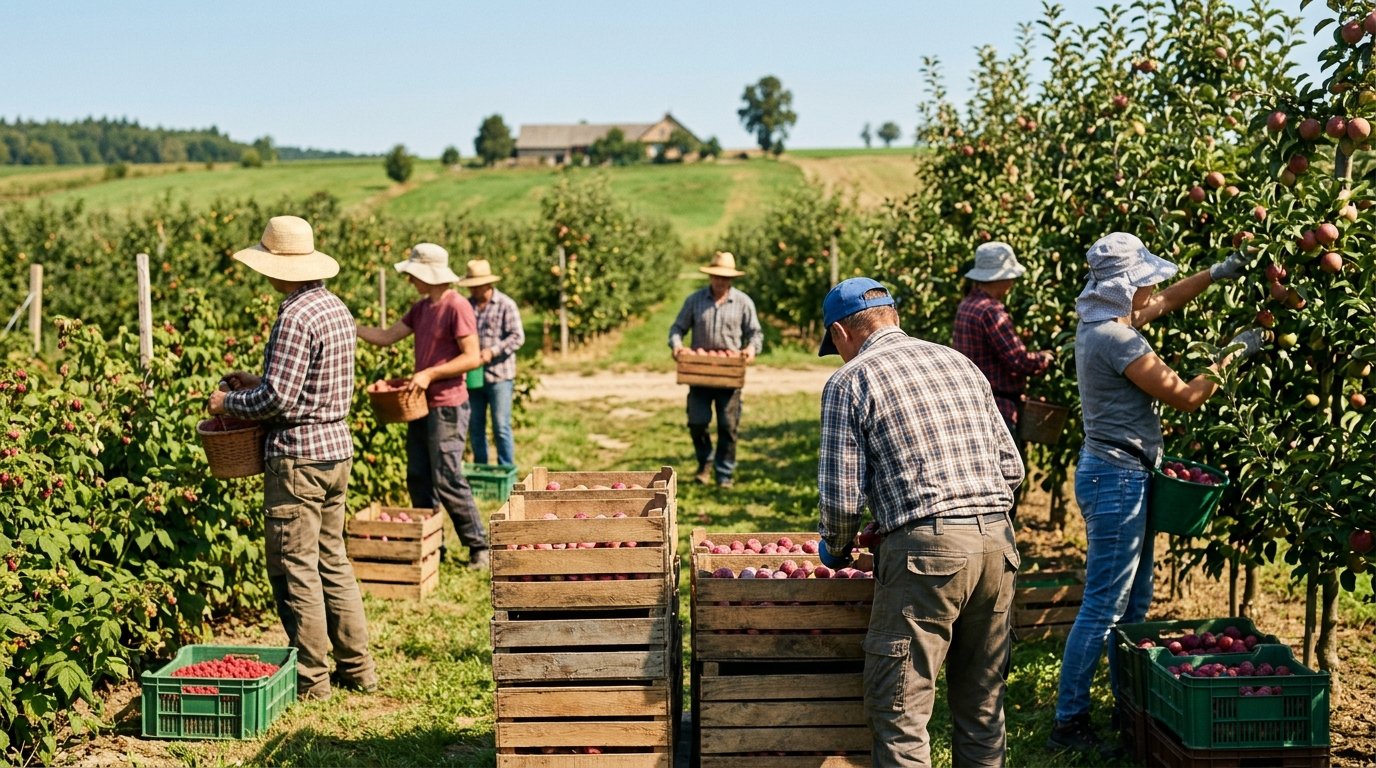
- Agriculture and horticulture — fruit and vegetable picking, greenhouses, flowers.
- Food processing — seasonal factory and packing work.
- Tourism and hospitality — hotels, restaurants, and resorts in peak season.
The permit is issued for a specific worker, specific employer, and specific job, so it isn’t a free pass to work anywhere.
What you can realistically earn
Be realistic: these are entry-level roles paid at or near Poland’s minimum wage, which is the legal floor employers must meet. Housing is often shared and sometimes arranged by the employer, and some jobs include meals or transport. It’s a route to save money over a season and gain EU work experience, not a high-salary career move. Always get your wage, hours, and any accommodation cost in the written contract before you travel.
The real 2026 changes you need to know
Here’s what actually shifted this year and affects seasonal applicants:
- Everything is digital now. Since mid-2025, Polish employers must file work-permit applications online through the praca.gov.pl portal — paper applications are simply not processed.
- Residence-permit steps moved online too. If you need to extend your stay for continued seasonal work (still within the nine-month cap), applications go through the MOS portal, and from April 27, 2026 that online route is mandatory.
- Visa fees went up. From January 1, 2026, Poland’s national (D-type) visa fee rose to €200. Confirm the exact fee for seasonal cases with your consulate, as consular charges can vary.
- The seasonal permit fee stayed low. Amid broad fee hikes across Polish immigration, the seasonal work permit application fee remained PLN 100 — one of the few costs that didn’t jump. That’s genuinely good news for this route.

How to apply, step by step
- Find a genuine job offer from a registered Polish employer in a seasonal sector. Use official and reputable job sources, not random social-media “agents.”
- Employer applies for the seasonal work permit through the powiat (district) labour office via praca.gov.pl. This permit names you and the specific job.
- You apply for the national D-type visa at the Polish embassy or consulate in your home country, using the approved seasonal permit.
- Attend your visa appointment with your documents: passport, application form, the seasonal permit, proof of insurance, and accommodation.
- Enter Poland and start work once the visa is stamped. Register as required and keep copies of everything.
- If your work continues, apply on time (through MOS) for a temporary residence permit for seasonal work — but remember the total stay can’t exceed nine months.
Processing is usually quick by immigration standards: the permit often takes a couple of weeks, and consular visa processing commonly runs from about one week to a month, depending on the country and workload.
Honest limits — who this doesn’t work for
This route is great for what it is, but be clear-eyed:
- No path to permanent residence or citizenship. Seasonal work is strictly temporary and does not count toward long-term settlement.
- You must leave and return between seasons. After your permit ends, you go home; you can reapply for a future season.
- No family reunification. The seasonal visa covers only the worker.
- You’re tied to the employer and job on the permit; switching isn’t simple.
- If your goal is to settle in Europe long-term, a standard work permit, EU Blue Card, or a study route fits better than seasonal work.
Protect yourself from scams
This niche attracts fraud, so guard your money:
- Never pay large upfront “guarantee” fees. A legitimate employer or the official process does not require thousands of rupees to “secure” a visa.
- Verify the employer and permit. The seasonal permit is a real government document naming you — ask to see it.
- Apply through official portals and consulates, not middlemen who promise guaranteed approval. No agent can guarantee a consul’s visa decision.
- Be suspicious of instant offers over messaging apps with no contract.
Key Takeaways
- The Poland seasonal work visa allows up to 9 months of legal seasonal work — and that nine-month rule is long-standing, not a new 2026 change.
- It’s open to non-EU workers with a job offer, needs no degree and no IELTS, and has no labour-market test.
- Real 2026 changes: fully digital permit filing (praca.gov.pl), MOS online residence applications (mandatory from April 27, 2026), and a higher €200 national visa fee — but the seasonal permit fee stayed at PLN 100.
- It does not lead to PR, doesn’t allow family to join, and requires you to return home between seasons.
- Avoid agents demanding big upfront payments; verify everything and use official sources.
also read: https://bollyflixu.com/obsession-box-office/
FAQ
How long can I work in Poland on a seasonal work visa?
Up to nine months within a 12-month period. This nine-month cap is a long-standing rule under EU seasonal-worker rules, not a new 2026 change, despite some posts claiming it was recently extended from six months.
Do I need a degree or IELTS for a Poland seasonal work visa?
No. Seasonal roles in agriculture, food processing, and hospitality don’t require a university degree or an IELTS score. Basic English or Polish helps for safety and daily tasks, but the route is designed to be accessible to entry-level foreign workers.
How much does the Poland seasonal work visa cost in 2026?
The seasonal work permit application fee stayed at PLN 100. Poland’s national D-type visa fee rose to €200 from January 1, 2026, though seasonal consular charges can vary, so confirm the exact amount with the Polish consulate in your country.