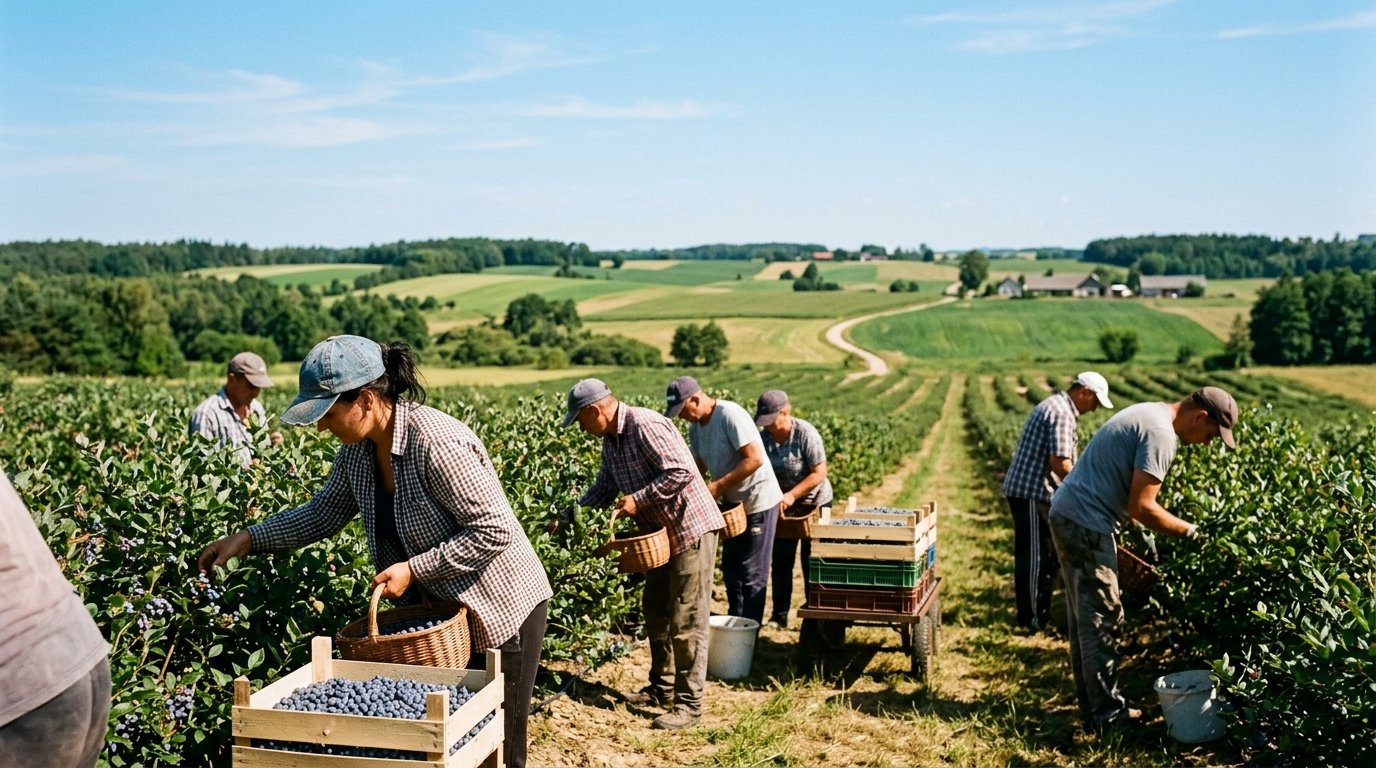
Poland Seasonal Work Visa 2026: The Honest Guide to Type S Jobs and How to Apply
Every summer, Poland’s farms, orchards, greenhouses, and tourist towns need thousands of extra hands — and the seasonal work visa is the legal door that lets non-EU workers walk through it. If you’re planning to pick fruit, work a harvest, or take a hospitality job in Poland in 2026, this guide gives you the honest version: the real rules, the actual fees, the new online process that trips people up, and the agent scams you must avoid.
What is the Poland Seasonal Work Visa 2026? It’s a national (Type D) visa tied to a Type S seasonal work permit that lets non-EU workers do temporary jobs in agriculture, horticulture, and tourism for up to nine months in a calendar year. Your Polish employer secures the seasonal permit from the local labour office first; you then apply for the visa at a Polish consulate in your home country.
That order matters — employer first, worker second — and getting it wrong (or trusting an agent who fakes it) is where most people lose money.
Who can apply, and which jobs qualify
The seasonal route is open to citizens of almost all non-EU/EEA countries. In practice, the biggest applicant groups each year come from Ukraine, India, Nepal, the Philippines, Bangladesh, Vietnam, and Indonesia — so if you’re reading this from South Asia, this is a well-worn path.
The permit is specifically for seasonal sectors, mainly:
- Agriculture — field crops, planting, harvesting.
- Horticulture — orchards, greenhouses, fruit and vegetable picking.
- Tourism and hospitality — hotels, resorts, and food service during peak season.
It is not a general work visa. You can’t use a seasonal permit to take a year-round factory or office job — that’s a different permit (Type A) with a different process.
The 9-month rule — get this exactly right
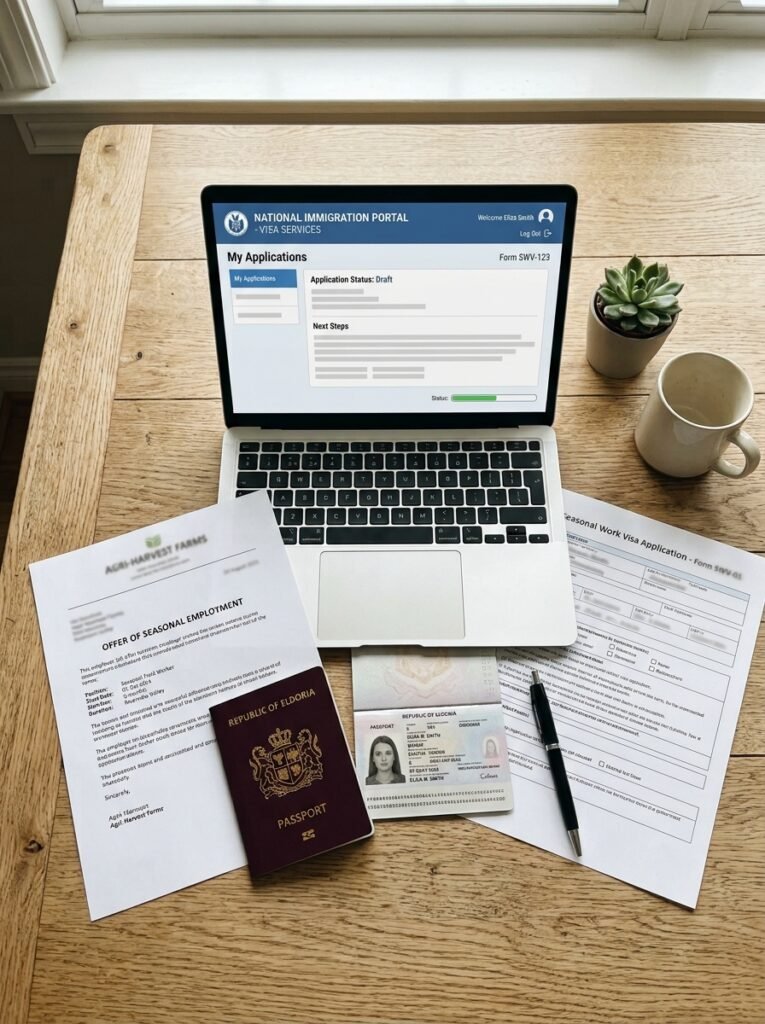
Here’s the single most important number: a seasonal worker can be authorised for a maximum of nine months within a calendar year. That’s the cap, and it’s the current framework — not a temporary promotion.
A quick myth-buster: some websites claim Poland “extended” the seasonal limit from six to nine months as a brand-new 2026 change. Treat that with caution — the nine-month seasonal ceiling is the established standard, and we’re not asserting a fresh extension that official Polish sources don’t clearly confirm. Always trust the Polish consulate or the government migration portal over a blog’s headline, including ours. If a claim affects your travel plans, verify it at source.
The 2026 changes that actually matter
Poland has modernised its foreigner-processing system, and a few real changes affect seasonal workers this year:
- Online-only residence applications from 27 April 2026. If your stay runs long enough to need a temporary residence permit, that application must now be filed electronically through the MOS portal (mos.cudzoziemcy.gov.pl, accessed via login.gov.pl). Paper applications submitted the old way are simply not examined. You’ll need a PESEL number and a Trusted Profile to use it.
- Digital passport scans are mandatory. Under a late-2025 documentation rule, a clear scan of every filled passage page is now required — blurry or partial scans cause rejections.
- Fees you should know. The Type S seasonal permit application costs PLN 100 (the fee structure was updated from 1 December 2025), and the national visa itself carries a consular fee in the region of €80. Keep proof of every payment.
What you’ll actually earn
Seasonal pay is modest and tied to Poland’s legal minimum, so set expectations honestly. Poland’s 2026 monthly minimum wage sits in the region of PLN 4,600–4,800 gross — but figures are updated periodically and can differ between full-time thresholds and hourly seasonal rates, so confirm the current number before you sign anything. Your contract must meet the legal minimum for your role and region; an offer paying below that is a red flag.
Remember that gross is not take-home. Poland deducts income tax and ZUS social contributions, and you’ll have living costs — often accommodation is arranged (sometimes deducted from wages), which you should confirm in writing before you travel.
How the process really works — step by step
- Find a genuine employer and job offer. The employer must be a real, registered Polish business willing to sponsor you. Verify they exist.
- Employer registers the seasonal work permit. The Polish employer applies for the Type S permit at the local powiat (district) labour office — the Powiatowy Urząd Pracy — for your specific job. Seasonal work skips the full labour-market test that standard permits face, which makes it faster.
- You get the entry document. Once registered, you receive confirmation (the seasonal work application/permit, linked to visa symbol 05b) needed for your visa.
- Apply for the visa at a Polish consulate in your home country (often via a visa centre such as VFS). Bring your passport, the seasonal permit/confirmation, proof of accommodation, and travel medical insurance covering at least €30,000 in the Schengen area.
- Attend biometrics and any interview. Answer honestly — inconsistencies are a common refusal reason.
- Enter Poland and start work. Consular processing commonly runs from about 7 to 30 days, though peak spring/summer demand can stretch it. Apply early.
- Staying longer than three months? You may need a temporary residence permit — and from 27 April 2026 that’s filed online through MOS before your legal stay ends.
Documents checklist
- Valid passport (at least two blank pages; issued within the last 10 years; valid well beyond your visa).
- The seasonal work permit / registered application from your employer.
- Completed visa application form and a compliant photo (35 × 45 mm, recent).
- Proof of accommodation in Poland.
- Travel medical insurance (€30,000+ Schengen coverage).
- Proof of the purpose and conditions of employment.
- Visa and permit fee receipts.
The scam warning that could save your savings
Seasonal work in Europe is one of the most heavily scammed corners of overseas recruitment, and workers from South Asia are targeted hard. Protect yourself:
- A legitimate employer does not sell you a job. If an “agent” demands large upfront fees to “guarantee” a Polish seasonal visa or permit, that’s a fraud pattern.
- Fake permits are common. Insist on verifiable employer details and, where possible, confirm the seasonal permit registration independently. Never rely on a photo of a document sent on WhatsApp.
- Never send money to a personal account or pay for a “confirmed slot” before a real, checkable job offer exists.
- Watch the refusal and fraud history. Poland’s consulates apply extra scrutiny in regions with high visa fraud, so a clean, honest, well-documented application matters more here than almost anywhere.
- Overstaying is a trap. Even a few days beyond your visa can trigger entry bans across the Schengen area. Plan your exit or extension well before your permit ends.
If an offer feels too fast, too guaranteed, or too expensive, it’s protecting a middleman — not your future.
Who this route does NOT suit
- People wanting a permanent move. Seasonal work is temporary by design; it doesn’t directly convert into long-term settlement. If permanent residence is your goal, look at the standard Type A permit or the EU Blue Card instead.
- Anyone expecting high wages. This is minimum-wage, physically demanding work — harvests, long hours, outdoor conditions.
- Applicants who can’t document everything. Weak paperwork and vague employers lead straight to refusals.
- Those relying on an agent’s promises. If your whole plan rests on paying someone to “arrange” it, pause and verify independently first.
Key Takeaways
- The Poland Seasonal Work Visa 2026 is a Type D visa tied to a Type S permit for agriculture, horticulture, and tourism.
- Maximum authorised stay is nine months in a calendar year — the established cap, not a new promotion.
- Employer first: they register the seasonal permit at the powiat labour office; you then apply for the visa at a consulate.
- Key 2026 updates: online-only MOS filing for residence permits from 27 April 2026, mandatory digital passport scans, and a PLN 100 seasonal permit fee.
- Expect minimum-wage pay (around PLN 4,600–4,800 gross/month region — verify current figure) minus tax and ZUS.
- Never pay an agent for a “guaranteed” visa — and never overstay, or you risk Schengen entry bans.
also read: https://www.careers.ilmiupdates.com/poland-seasonal-work-visa-2026-2/
FAQ
Q1. How long can I work in Poland on a seasonal work visa in 2026?
Up to nine months within a single calendar year. The seasonal route is capped at that limit and is meant for temporary jobs in agriculture, horticulture, and tourism — not year-round employment.
Q2. Can I apply for the Poland seasonal work visa from India, Nepal, or Pakistan?
Yes. The seasonal route is open to almost all non-EU nationals, and South Asian workers apply in large numbers. Your Polish employer registers the seasonal permit first; you then apply for the visa at the Polish consulate or visa centre in your country.
Q3. How much does the Poland seasonal work visa cost?
The Type S seasonal permit application costs PLN 100 (updated from December 2025), and the national visa carries a consular fee of roughly €80. You’ll also need travel medical insurance covering at least €30,000. Beware anyone charging huge extra “service” fees.