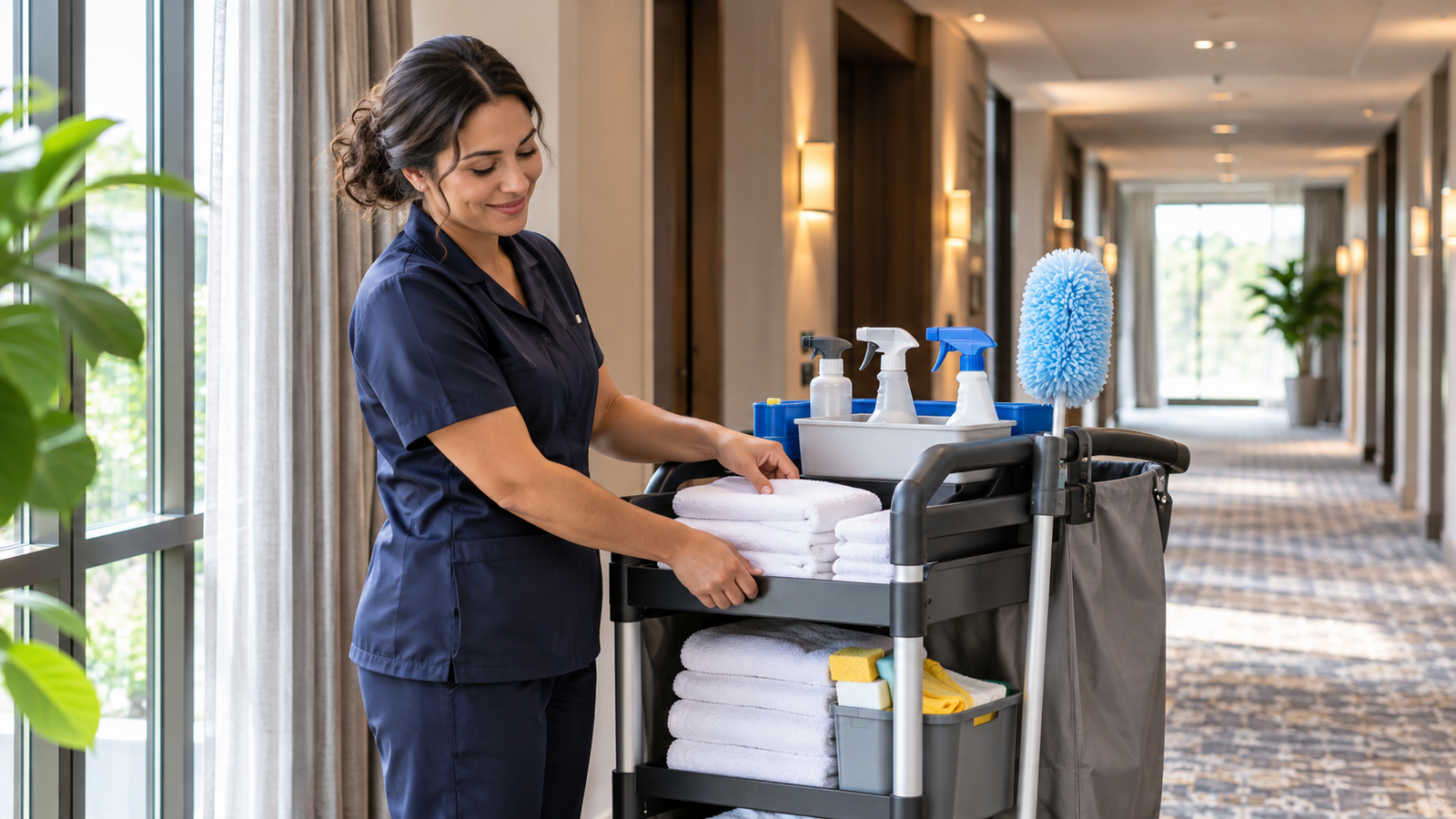
Canada cleaner jobs can appeal to applicants looking for practical, entry-level work. The useful question is not whether an advert says “unskilled”, but whether its duties, requirements and applicant eligibility match your circumstances.
This is an application guide, not a list of confirmed vacancies. It does not promise a job, an LMIA or a work permit.
Understand the role before applying
Light-duty cleaning is a defined occupation, not a guarantee that every employer has the same expectations. Read the Job Bank requirements for light-duty cleaners, then compare the individual advert. Its instructions take priority over a generic checklist.
Ask what the shift involves: hotel rooms, offices and shared facilities can require different routines. Consider travel to early starts, standing for long periods and the ability to follow instructions carefully. Do not describe unfamiliar tasks as previous experience.
Check who the employer will consider
An international applicant should not assume every Canadian listing is open to candidates abroad. Use Job Bank’s foreign-candidate guidance and check the applicant eligibility section before spending time on an application.
Separate an employer’s willingness to consider you from your permission to work. Immigration approval is a separate matter. Start with IRCC’s working-in-Canada guidance when considering your route.
Build a short, honest application
A useful cleaner resume is easy to scan. Put relevant experience near the top, using concrete examples rather than a long list of adjectives. If you have cleaned guest rooms, maintained a community space or followed a workplace checklist, explain where, when and what you actually did.
- Use a clear contact email and current telephone number.
- List truthful work dates and responsibilities.
- Mention relevant equipment only if you have used it.
- Explain availability accurately; do not promise a start date you cannot meet.
- Follow the advert’s requested subject line and file format.
Example wording: “Maintained shared areas during evening shifts and reported supply shortages to the supervisor.” Adapt this only if it describes your own work. A modest, specific statement is stronger than an invented achievement.
Compare the whole offer
Before accepting, request understandable written information about duties, location, pay, hours and the employer’s identity. Compare the wording with the original advert. Ask about any unexplained difference instead of assuming it is normal.
Create an application log with the employer, job link, date, contact and next action. This helps you distinguish a genuine reply from an unsolicited message about a position you never applied for. Independently locate the business’s public contact details before sending sensitive documents.
Prepare for a practical interview
Be ready to describe how you organise tasks, ask for clarification and respond when you notice a problem. An employer may value a clear explanation of a real routine more than memorised interview phrases.
Prepare your own questions: What does training cover? Who supervises the shift? How are tasks checked? These questions help you understand the job without making assumptions about its conditions.
Common questions
Does entry-level mean no requirements?
No. Read each employer’s advert and be honest about your abilities and availability.
Does a job offer guarantee a work permit?
No. Employment selection and immigration permission are separate decisions.
Should I apply to every cleaner advert?
A smaller number of relevant, carefully checked applications is usually a better use of your time than sending the same message everywhere.
Reviewed 8 November 2026. General career information; verify current requirements through Job Bank, the employer and IRCC.