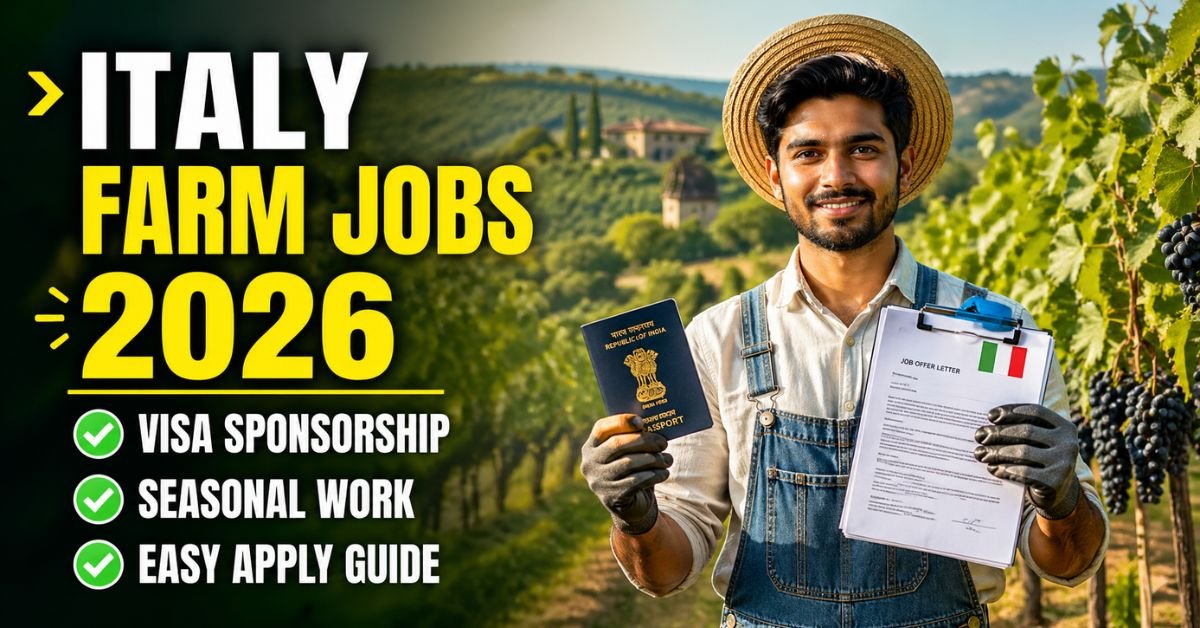
Italy Farm Worker Visa Jobs 2026 – Seasonal Work Guide
Most people looking for work overseas might find things unclear, particularly if they lack higher education. Yet landing steady jobs in another country often seems out of reach under such conditions. When it comes to uncovering real chances that include visa backing, confusion grows – especially around qualifications and honest details. Still, by 2026, roles on building sites in Saudi Arabia could provide clear paths forward through official support. Though hurdles exist, actual options do emerge for laborers willing to navigate them.
Italy’s visa sponsorship jobs for farm workers in 2016 offer a tangible opportunity for international workers seeking new work experiences. Italy has a robust agricultural economy that relies on seasonal workers, with thousands of jobs available for fruit and vegetable picking, harvesting, greenhouse cultivation and vineyard maintenance. The positions are particularly well suited for those looking for temporary work with work permits.
The Italy Farm Worker Visa Sponsorship Jobs 2026
Italy provides seasonal work visas through its annual immigration quota program, known as the “Decreto Flussi”. It enables non-EU national workers to work in Italy legally for a period of time in industries like agriculture and tourism. Agriculture is a major sector.
In 2016, Italy is likely to offer thousands of seasonal job opportunities to foreign workers in the agricultural sector. The positions are usually for 3 to 9 months, depending on the crop cycle and needs of the employer. Italian employers can hire foreign workers by providing a work contract and work permit.
The jobs are particularly in demand in the agricultural regions of Tuscany, Sicily, Apulia, and Emilia-Romagna. Workers are needed for fruit and vegetable picking, olive harvesting and wine-making.
Key Highlights
- Non-EU workers can apply for seasonal work visa
- Work period: 3-9 months
- Education not mandatory
- Modest physical condition required
- Visa sponsorship is provided
- Average salary: €800 – €1500 per month
- Housing may be provided or subsidized
In demand in harvest time
Farm Jobs in Italy
The Italian agricultural market offers several different types of jobs, depending on the time of year and location. These positions usually do not require a degree, but may require some physical labour and outdoor work.
Fruit Picking Jobs
Fruit picking is a popular job. People are employed to harvest apples, oranges, grapes, strawberries and peaches. This work is very seasonal and fast-paced.
Vineyard and Winery Work
Wine is a significant industry in Italy. These roles include grape picking, pruning and vineyard maintenance. These jobs are in particular demand in fall.
Greenhouse Jobs
Greenhouse jobs include planting, irrigating and harvesting various crops including tomatoes, peppers and herbs. This work may have more guaranteed hours than field work.
Olive Harvesting
Olive farms offer jobs for olive harvesting, particularly in southern Italy. It can be hard physical labour but a cultural experience.
Salary and Working Conditions
- In Italy, farm worker wages depend on the region, employer and work. The average salary ranges from €800 to €1500 a month. Pay can be either hourly or monthly.
- The standard working hours are 6-8 hours a day, with one day off per week. Overtime hours may be needed during harvest times and employers may offer a premium pay rate.
- Some employers provide accommodation, either free or with a discount. But this is not always the case, and should be clarified when applying for a position.
- Labor conditions can be tough, particularly in warm weather. Outdoor work and safety procedures should be expected.
Sponsorship and Work Permit Info
- The Italian seasonal work visa is employer-sponsored. This means you can’t apply on your own; you have to first obtain a job offer from an Italian employer.
- If an employer chooses you for a job, they will request a work permit (Nulla Osta) from the Italian immigration authorities. Once granted, you apply for a visa at the nearest Italian embassy/consulate.
- The visa will allow you to travel to Italy and work for the employer for the duration of the contract. Remember that the visa is temporary and does not guarantee residency.
Eligibility Requirements
For Italy farm worker visa sponsorship jobs in 2026, applicants need to fulfil the following requirements:
- Valid passport
- Offer of employment from an Italian employer
- Knowledge of basic job duties
- Good health to perform manual work
- Not have serious criminal convictions
- Agree to visa conditions
Proficiency in a language is not always required, but some English or Italian may come in handy.
Step-by-Step Application Process
Step 1: Look for Job Opportunities
Look for authentic farm job vacancies on reputable websites, agencies or employer websites. Be wary of offers of guaranteed visas without interviews.
Step 2: Apply for the Job
Provide your resume and personal information. Emphasise any farm experience or manual labour, even if it’s not formal.
Step 3: Receive Job Offer
If successful, the employer will offer a job contract and start the sponsorship process.
Step 4: Work Permit Application
The employer requests a permit (Nulla Osta) under Italy’s seasonal quota program.
Step 5: Visa Application
If granted, you can then apply for a seasonal work visa at the Italian consulate in your home country.
Step 6: Travel to Italy and Start Working
Once you receive the visa, you can go to Italy and start working according to the contract.
Living in Italy While Working on Farms for Part of the Year
Starting fresh somewhere unfamiliar might seem tough, especially if it is just for a short while. Still, folks who work on Italian farms during harvest seasons often say things get easier after a week or two. Once they learn how mornings begin and where evenings lead, most start feeling at home. Getting clear on daily rhythms – the chores, the breaks, the towns nearby – makes stepping into the rhythm smoother than expected.
Out of necessity, most farm hands stay in housing set up by their bosses or found close by. Often tucked away near fields, these places come with just what you need – beds, cooking spaces, toilets. Sometimes, roommates come from far-off places, bringing varied languages and habits into one space. Unexpected conversations spark over shared sinks or mismatched plates.Before sunrise, routines begin. Mornings kick off just as light touches rooftops, a move meant to dodge the heavy warmth that builds by noon – this matters most when summer stretches long. Once tasks wrap up, hands shift to pots and pans, or feet wander toward small streets of neighboring spots
Seasonal Work Contracts in Italy
Most folks overlook the fine print before signing on. Yet when it comes to seasonal farm jobs in Italy, rules set by law shape every agreement. Think position held, how long you stay, pay rate, daily shifts – these aren’t left to chance. Each term lands on paper because regulations demand clarity. Details matter just as much as the signature at the bottom.
Contracts typically specify:
Employment began on a specific date. That period concluded later, marked by another day entirely
Picking apples might happen here. Harvest time often brings crews into fields. Sometimes tasks shift between crops ready for collection. Work changes when seasons move forward. Gathering produce fills days during peak growth months
- Start and end dates of employment
- Type of work (e.g., fruit picking, harvesting)
- Daily or weekly working hours
- Salary structure (hourly or monthly)
- Overtime policies
- Accommodation details (if provided)
Start by checking whether the agreement lines up with what they said when you applied. When able, ask for an English copy so nothing gets lost in meaning.
Most people doing jobs in Italy have a right to pay that makes sense along with places where it is safe to work. Bosses need to stick to those rules, yet if they do not then someone might tell officials nearby. Workers are entitled to fair wages and safe working conditions under Italian labor laws. Employers are expected to follow these regulations, and any violations can be reported to local authorities.
Rights and Duties of People Who Work on Farms
You’re not just filling a role when working seasonally in Italy – your rights travel with you. Knowing what applies to your situation prevents confusion, while clear expectations make days on the job run easier.
Your Rights
- Getting paid what was promised, when it was supposed to happen, is something you’re guaranteed. Safety where you work matters just as much as having clean water and a place to take breaks. Time away from tasks during the day shows up in most job setups. A full day off each week often appears too, though that detail rides on the agreement signed. What matters sits inside those terms, nothing more.
- When lodging comes with the deal, it has to be livable. Should problems pop up, help might come from groups that back workers nearby.
Your Responsibilities
- Showing up on time matters just as much as doing what your contract says. When work gets handed to you, handle it without needing reminders. Rules around the farm exist for a reason – stick to them. Getting along with others keeps things moving smoothly. Discipline isn’t about strictness – it shows in how steady you are every day. Team settings rely on everyone holding their part together. How you act affects more than just yourself.
- On top of that, sticking to visa rules means your job has to be with the sponsor – not anyone else. Staying past the allowed time is off limits too.
Italy Seasonal Work Calendar
Farm work in Italy often depends on the clock of nature. When crops ripen decides when workers are needed. Knowing harvest times means showing up when farms actually need hands.
Here’s a general overview:
- Spring (March – May):Strawberry picking, greenhouse work
- Summer (June – August): Tomato harvesting, fruit picking (peaches, cherries)
- Autumn (September – November):Grape harvesting (vineyards), olive picking
- Winter (December – February): Limited work, mostly greenhouse or maintenance tasks
Summer tends to bring the busiest hiring stretch each year. Before those months roll around, getting applications in can make landing work more likely.
Cost of Living and Savings Potential
Most people worry about saving cash when moving overseas for work. Living in Italy? It really comes down to where you are – city versus countryside – plus if housing gets covered by the job.
When work pays for rent – and maybe food – spending drops fast. That drop means people keep more cash, even on low paychecks.
Most of the time you might spend money on things like these:
- Food and groceries
- Transportation
- Mobile phone and internet
- Personal items
A typical worker might set aside some cash within half a year by watching what they spend. Still, how much gets saved depends on pay level, time clocked in, or whether weekends lean quiet or busy.
Keeping safe and well while working on farms
- Farm jobs often require heavy lifting, which means staying alert matters. Since risks exist out there, protection begins with smart choices every morning. A boss must offer proper tools and clear rules, yet each person on site plays a role too. Boots, gloves, rest – small things add up when days stretch long under sun or rain.
- When working outdoors, wearing gear like gloves, head coverings, or sturdy footwear might be necessary based on your tasks. Water intake matters more when temperatures rise. Pausing often while steering clear of pushing too hard keeps harm at bay.
- Before you go, check what medical care you’re allowed in Italy. Sometimes job benefits include simple insurance that helps if you get sick. Not every worker gets it though. Making sure ahead of time can save trouble later on.
Cultural Experience Work Environment
- Life on the countryside in Italy ties closely to customs, meals, together with shared daily rhythms. Earning wages there comes along with soaking up a different way of living.
- Fresh food straight from nearby fields might land on your plate during visits. Learning how crops were grown long ago often comes up in conversation. Getting to know folks with lives unlike yours happens naturally here. Most of these places pass down through generations, shaping days around closeness instead of crowds.
- Showing up with an open mind often makes a difference. When people notice you respect traditions, they tend to respond in kind. A simple thank you goes further than expected. Learning even small phrases means something. Treating others as individuals sets a quiet tone. Patience when things feel unfamiliar helps more than rushing. People remember how you made them feel during first meetings.
Returning Opportunities and Future Prospects
- Though farm jobs on a seasonal visa last just part of the year, good workers often find themselves called back later. A solid season’s work might lead an employer to reach out again when planting or harvest rolls around next time.
- Occasionally, working in Italy might boost your chances elsewhere across Europe – or even in seasonal roles far beyond. Even if staying forever isn’t an option, time spent there often becomes useful when stacking global job history.
Seasonal Farm Work in Italy Offers Practical Experience and Local Insight
- Working on farms in Italy during certain times of year brings many benefits, particularly for people wanting overseas experience alongside temporary work.
- Getting permission to work legally happens when visas are sponsored, cutting down chances of unauthorized jobs. Experience builds while working in Europe, something that might help later on. What counts is being part of a system where rules apply, yet growth still fits into daily tasks.
- On top of that, certain jobs include housing along with daily meals, which cuts down living costs. Getting to live through Italy’s rhythms, tastes, and everyday moments stands out just as much.
- Some of these roles might open doors to later work across Europe, even though staying permanently isn’t assured. Not every path leads to settlement, but chances to move forward exist. A temporary position today could become something more down the line. Nothing promises an extended stay, yet experience gained may help later. Moving into another job in Europe sometimes begins this way. The door isn’t closed, just not automatic.
Tips to Boost Your Odds
- Most people want those short-term roles, which means showing you’re different matters.
- Start off fast – spots vanish soon after openings launch. A clean, clear resume works best when it shows what you’ve done that matters. Instead of cluttering pages, pick moments that fit the role. Timing often beats perfection here. What counts is being ready before doors swing shut.
- Start by checking where information comes from. When someone asks for too much money or guarantees odd results, step back. Real companies stick to the rules because they have to.
- Start by sharpening how you talk to people. A few words in English or Italian might just brighten someone’s day.
- Openness to varied tasks on farms might just land you the spot. Shifting between duties – or even places – could make all the difference.
Common mistakes to avoid
- Wrong moves shut doors people could have walked through. Mistakes that stack up when focus slips let chances fade away. Simple oversights – easily fixed – end up costing time, effort, results. Each small misstep chips at progress without warning.
- Some people trust agents without checking first. That might result in fraud or turned-down paperwork. Check every work offer carefully – know who you are dealing with.
- Got gaps in your paperwork? That might slow things down – or stop them altogether. A single missing page could be enough to pause your application.
- Farm jobs can surprise people who didn’t expect how tough they really are. Getting ready isn’t just about showing up – it’s about training your body too.
- Last thing – submitting too close to the deadline might mean missing out. Spots fill up fast, simply because there are only so many available each season.
Also Read: Amazon Visa Sponsorship Jobs 2026 – Apply For Global Roles
FAQs
-
Experience requirements for farm work in Italy vary by job?
True, it isn’t always required. Experience can help, yet plenty of companies bring on people fresh to the field for simpler roles.
-
Is it possible to keep using my temporary job permit past its current date?
Occasionally, extra time gets granted past the usual limit – though living there forever means swapping visas. A new kind begins when the old one runs out.
-
Is accommodation included?
Not every employer offers a place to stay – check first. Before saying yes to work, find out what is actually included.
-
How long does the visa process take?
Some steps might stretch across weeks, even into months – timing often hinges on how fast approvals move plus embassy schedules. A wait could unfold slowly, shaped by those two forces.
-
Applying without having a position lined up?
Only after receiving a job can you begin the process for a seasonal work visa. Getting hired first is necessary.
Final Thoughts
Seasonal jobs on Italian farms might open doors for people wanting overseas work in 2026. While rules apply, such roles offer a way into Europe’s workforce legally. A set timeframe means limited stay, yet real pay and hands-on practice come along. For some, it becomes more than just a job – almost like stepping into another rhythm of life.
Still, getting it right means being ready, staying alert, then choosing wisely. Knowing your contract helps, following visa limits matters just as much, while showing up consistently makes the difference.