Pakistan Just Made the Protector Fee Cashless — and It Shows Exactly What You Should Be Paying
On 16 July 2026, the Bureau of Emigration & Overseas Employment launched a QR-based cashless payment system with the National Bank of Pakistan, and it quietly removed one of the easiest places for a Pakistani worker to be overcharged: the fee counter.
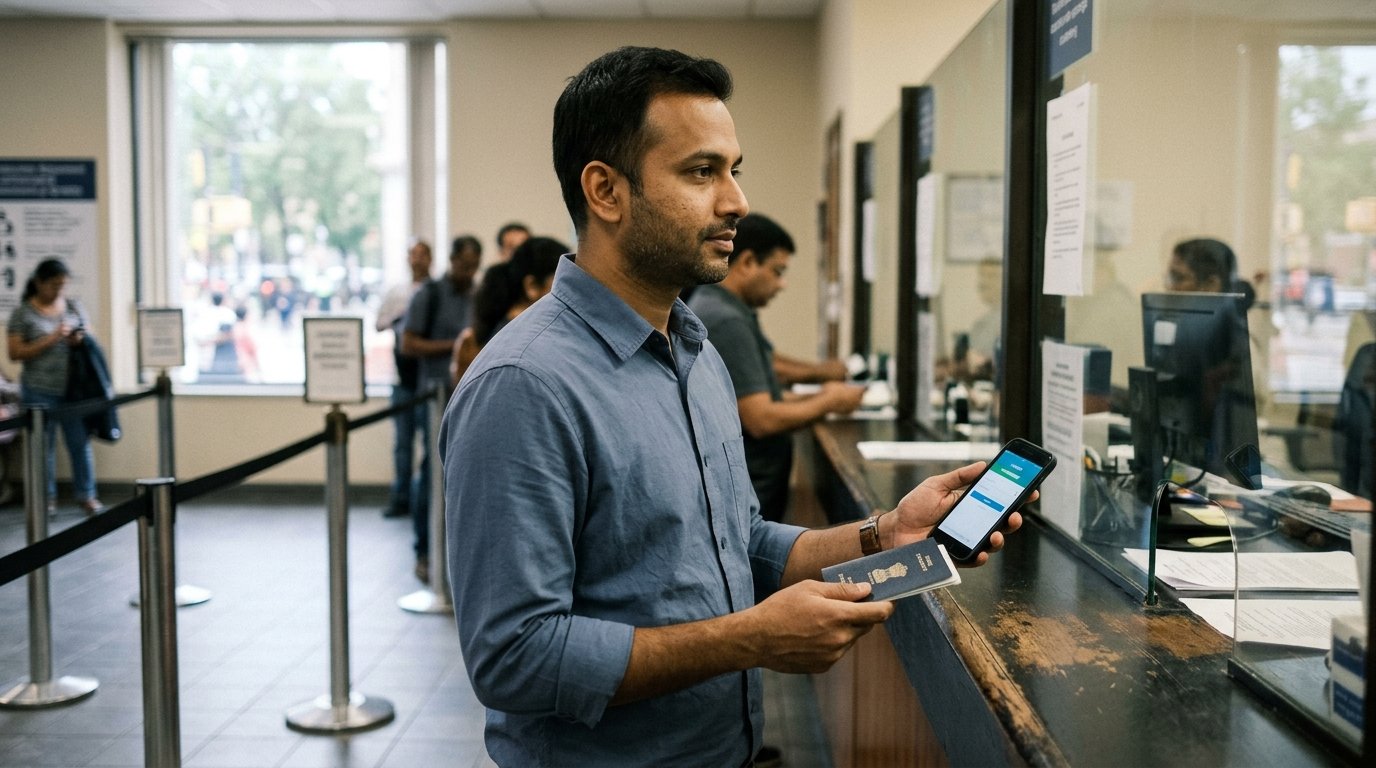
You can now scan a QR code at any Protectorate of Emigrants office and pay your registration, protector, insurance and welfare fund fees straight from a mobile wallet or bank account. No paper challan. No separate trip to a bank. Every rupee time-stamped and recorded.
That matters for a reason nobody put in the press release. Once the payments are digital and the official amounts are published, there is no longer any honest explanation for an agent asking you for a vague, unreceipted “protector ka kharcha.”
In short: The protector is the mandatory clearance every Pakistani must get before leaving for a job abroad, under the Emigration Ordinance 1979. Your work contract is countersigned by the Protector of Emigrants and a sticker is placed in your passport. BEOE’s published fee structure totals Rs 22,200 through a licensed agent, or Rs 9,200 for direct employment.
What “protector” actually is
Under the Emigration Ordinance 1979, every Pakistani going abroad on a work visa is required to be “protected” before departure. It is not a formality invented by agents.
In practice, protection means your Foreign Service Agreement — the contract between you and the foreign employer — is signed by you and countersigned by the Protector of Emigrants. That countersignature is what makes the terms enforceable. If the employer later pays less than the agreement says, or the job turns out to be different, you have a document and an office to complain to.
Skip it and you have neither. You also fly out as an undocumented worker in the eyes of Pakistani law, which is exactly the situation traffickers rely on.
Two things follow from this that surprise people:
- The protector is tied to the job, not to you. If you change employer, you need fresh protector clearance for the new contract from your Protectorate of Emigrants office.
- It stays valid as long as the terms stay the same. If your contract terms have not changed, your existing protection holds. A new agreement means a new clearance.
What changed on 16 July 2026
BEOE and NBP launched the QR-based cashless mechanism at a ceremony in Islamabad, under the government’s Digital Pakistan agenda. According to BEOE, the facility is operational at Protectorate of Emigrants offices nationwide with immediate effect.
Here is what it changes for you at the counter:
- All prescribed fees — registration, protector, insurance and welfare fund — can be paid by scanning a QR code
- Payment goes through mobile wallets or bank accounts, with real-time confirmation
- Paper challans, separate bank visits and cash counters are removed from the process
- Every transaction is digitally recorded and credited directly to the national exchequer
BEOE says the reform is meant to compress the timeline of the emigration process. The practical benefit is narrower and more useful: a digital receipt in your own phone, in your own name, for an exact amount.
The official fee structure — the numbers to memorise
These are BEOE’s published figures. Screenshot them before you visit any agent’s office.
If you are going through a licensed Overseas Employment Promoter (OEP):
| Item | Amount |
|---|---|
| OEP service charges | Rs 15,000 (Rs 6,000 for processing cases) |
| Welfare fund (OPF) | Rs 4,000 |
| Insurance premium | Rs 2,500 |
| Registration fee | Rs 500 |
| OEC fee | Rs 200 |
| Total | Rs 22,200 |
If you found the job yourself — direct employment:
| Item | Amount |
|---|---|
| Welfare fund (OPF) | Rs 4,000 |
| Insurance premium | Rs 2,500 |
| Registration fee | Rs 2,500 |
| OEC fee | Rs 200 |
| Total | Rs 9,200 |
Two honest caveats, because you will hear both.
First, an OEP is barred by the Emigration Rules from charging you any fee other than the prescribed service charges. That is the rule. Demands for “extra” money in the lakhs — for a visa, for a “seat,” for speed — are not part of this structure.
Second, some genuine costs sit outside these tables: your passport, medical examination, trade test where the employer requires one, and depending on the contract, air travel. Those are real. What is not acceptable is an unitemised lump sum with no receipt. Ask for the breakdown in writing, and insist on a receipt for every payment.
Documents you need for registration through an OEP
BEOE lists the following for the registration file:
- Permission number for the foreign demand
- Passport
- CNIC
- Insurance certificate
- Welfare fund slip
- Protector fee slip
- Bank certificate or service charges (refundable through the OEP)
- Registration fee slip
- Adhesive stamp fee
- The Foreign Service Agreement
Once the documents are verified, you are sent to the briefing hall for orientation, your registration number is allocated, the protector sticker goes into your passport, and the Protector of Emigrants signs and embosses it. At the briefing you are told your legal rights and health-related information — sit through it properly rather than treating it as a queue to escape.
You can also begin the process online: BEOE runs an e-Protector registration option and a separate direct emigrant registration route on its website, which reduces time at the office.
How to check your agent in ten minutes
This is the part that saves people money, and almost no blog spells it out. Every tool below is free and on BEOE’s own website.
1. Confirm the licence is active. BEOE publishes a searchable list of licensed OEPs with contact details. Every legitimate agent has an OEPL number — the format looks like 4408/RWP. Ask for it, then check it against the active list. No number, no deal.
2. Check whether the agency is in trouble. BEOE publishes complaint outcomes, warnings, personal hearing notices and licence suspensions continuously — several appear on the site most working days. If your agency’s name shows up under a suspension or a live complaint, that is information you are entitled to have before you pay.
3. Check the blacklists. There are separate published blacklists for technical trade centres and for foreign employers. If the training centre or the employer on your paperwork appears there, walk away.
4. Verify the demand, not just the agent. A licensed agency still needs permission from the Protector of Emigrants to process a specific foreign demand, and that permission is valid for a limited period. Ask for the permission number and counter-verify it at your Protectorate office.
5. Counter-verify the contract terms. Take the offered terms to the Protectorate of Emigrants office and confirm that the salary and conditions match what has been approved. Doing this before you pay costs you an afternoon. Doing it after you land costs you a year.
The red flags that should end the conversation
- A visit, Umrah or study visa offered for work. Using these for employment abroad is expressly prohibited under the OEP code of conduct, and the person offering it knows that.
- Any payment to a Protectorate official or airport staff. The rules prohibit it outright. There is no fee that requires a private handover.
- No receipt. BEOE’s own guidance for workers is short and blunt on this: insist on a receipt for any payment.
- Recruitment through a medical diagnostic centre. A diagnostic centre cannot recruit or send manpower abroad. Only a licensed OEP can.
- A newspaper advert you cannot verify. BEOE’s advice is to contact the relevant Protectorate office to confirm whether a published foreign job advert is genuine.
The insurance nobody reads about
Your Rs 2,500 premium buys real cover, and most workers never learn the terms.
In case of death or disability during the validity of the insurance, the compensation is Rs 1 million. The cover has to be renewed after two years, either at your Protectorate office in Pakistan or through the Pakistan embassy in your host country. If it lapses, there is no entitlement.
A death claim can be filed by the nominee or a close relative at the relevant Protectorate office. A disability claim is filed by the worker. If you are on a multi-year contract abroad right now and you have not renewed since 2024, that is worth a phone call this week.
If something goes wrong
Complaints can be filed at BEOE headquarters, at any Protector of Emigrants office, with the Community Welfare Attaché in your country of employment, with the Wafaqi Mohtasib’s overseas Pakistanis complaint cell, or with the Ministry of Overseas Pakistanis and Human Resource Development.
There is an important distinction in how these are handled. A complaint against a licensed OEP is processed by BEOE, and the published record shows warnings, suspensions and restorations being issued regularly. A complaint against someone operating without a licence — a fake agent — is referred to the Federal Investigation Agency under the Emigration Rules, with the complainant informed.
That distinction is a reason to insist on dealing with a licensed agency in the first place. The unlicensed route leaves you filing a criminal complaint rather than a regulatory one.
Key Takeaways
- BEOE and NBP launched QR-based cashless fee payment on 16 July 2026, live at Protectorate of Emigrants offices nationwide.
- Protector clearance is mandatory under the Emigration Ordinance 1979 for anyone leaving Pakistan on a work visa.
- Published fee structure: Rs 22,200 through a licensed OEP, Rs 9,200 for direct employment.
- An OEP may not charge fees beyond the prescribed service charges. Get every payment itemised and receipted.
- Verify three things before paying: the OEPL licence number against BEOE’s active list, the agency’s complaint and suspension record, and the permission number for the specific foreign demand.
- Emigrant insurance pays Rs 1 million for death or disability, but must be renewed after two years or the entitlement lapses.
- Changing employer abroad means getting fresh protector clearance for the new contract.
- Fake, unlicensed agents are referred to the FIA — one more reason to stay inside the licensed system.
Sources: Bureau of Emigration & Overseas Employment (beoe.gov.pk) — press release of 16 July 2026 on the NBP QR-based cashless payment launch, published emigrant fee structure, registration process, FAQs and OEP code of conduct; Emigration Ordinance 1979 and Emigration Rules.
Ilmi Careers is an information site and is not affiliated with BEOE, the Ministry of Overseas Pakistanis, or any recruitment agency. Fees and procedures can be revised — confirm current details at beoe.gov.pk or your nearest Protectorate of Emigrants office before paying anyone.
FAQ
What is the protector of emigrants?
It is the government office that countersigns your foreign employment contract before you leave Pakistan. Under the Emigration Ordinance 1979, every Pakistani travelling abroad on a work visa must be “protected,” which makes the agreed terms enforceable and gives you a complaint route.
How much is the protector fee in 2026?
BEOE’s published structure totals Rs 22,200 if you go through a licensed Overseas Employment Promoter, including Rs 15,000 service charges, and Rs 9,200 if you arranged the job yourself as direct employment.
Can I now pay the protector fee without cash?
Yes. Since 16 July 2026 you can scan a QR code at any Protectorate of Emigrants office and pay registration, protector, insurance and welfare fund fees through a mobile wallet or bank account, with instant confirmation
.